Poison Ivy Treatments For Kids: What Actually Helps?

Few parenting experiences create panic quite like seeing your child play nicely outside, only to realize they are rolling around in a patch of poison ivy 😳.
One minute they're happy; the next, they're a hot, sticky, itchy mess. (Itchy from the rash, sticky because children are just sticky creatures, especially on popsicle-and-sunscreen days of summer.)
The good news is that most cases of poison ivy can be treated at home and are not serious.
Here is what parents should know about treating poison ivy in kids!
My Child Has Poison Ivy. What Should I Do?
| If This Happens... | What Parents Should Do |
|---|---|
| Your child may have just touched poison ivy. | Wash the skin with soap and cool water as soon as possible. Clean under the fingernails, then wash contaminated clothing, shoes, backpacks, sports equipment, and pet fur if needed. |
| Your child has a mild, itchy rash. | Try cool compresses, over-the-counter hydrocortisone cream, calamine lotion, or a colloidal oatmeal bath to help relieve itching and irritation. |
| The itching is keeping your child awake. | Ask your pediatrician or pharmacist whether an oral antihistamine, such as cetirizine (Zyrtec), may be appropriate. These medications may help with comfort but do not treat the rash itself. |
| The rash is widespread or causing significant swelling. | Contact your child's pediatrician. Prescription-strength topical steroids or oral corticosteroids may be needed for more severe reactions. |
| The rash involves the face, eyes, or genitals. | Seek medical evaluation promptly. Poison ivy in these sensitive areas often requires closer monitoring and may need prescription treatment. |
| The rash develops pus, fever, increasing pain, warmth, or rapidly spreading redness. | Contact your pediatrician promptly. These symptoms may suggest a secondary bacterial skin infection. |
What Causes Poison Ivy?
Poison ivy is one of the most common causes of allergic contact dermatitis in children. Allergic contact dermatitis is an itchy skin rash that develops when the immune system reacts to a substance that touches the skin.
In the case of poison ivy, the culprit is urushiol, an oily resin found in:
- Poison ivy
- Poison oak
- Poison sumac
Even a tiny amount of urushiol can trigger an itchy rash in children and adults who are sensitive to it. Some people develop severe reactions after minimal exposure, while others have only mild reactions or may not react at all.
Contrary to popular belief, the rash itself is not contagious! You cannot catch poison ivy from another person or by touching their rash.
However, urushiol oil can persist on clothing, shoes, backpacks, sports equipment, gardening tools, and even pet fur until it is washed away. If that oil comes into contact with someone's skin later, it can cause a new poison ivy rash.
That's why poison ivy sometimes appears to "spread." In reality, it's usually leftover urushiol causing a new exposure, not the rash spreading from one person to another or from one body part to another.
Poison ivy can also appear to spread from one exposure if different areas of the body are exposed. Thicker skin may be slower to react, for example, than areas of the body with thinner skin.
I Think My Child Just Touched Poison Ivy. What Should I Do?
If you think your child was exposed within the last several minutes, acting quickly may reduce the amount of urushiol absorbed into the skin. Mom mode -> activated!
As soon as you see/suspect poison ivy exposure:
- Wash the skin thoroughly with soap and cool water
- Don't forget to clean underneath the fingernails
- Remove contaminated clothing
- Wash any clothing or items your child was using at the time: shoes, hats, backpacks, sports equipment, gardening gloves, etc.
- Bathe pets that may have brushed against poison ivy
The sooner the oil is removed, the less severe the reaction may become!
Specialty poison ivy cleansers may also help remove urushiol after exposure. Check the product label carefully for age restrictions and instructions, especially when using one on a young child.
What Does Poison Ivy Rash Look Like?
Red, itchy, patchy rash symptoms usually appear 12 to 48 hours after exposure, although some children may develop symptoms sooner or later.
Common signs of a poison ivy rash include:
- Intense itching
- Redness
- Small bumps
- Fluid-filled blisters
- Swelling
- Streaky or linear rashes where the plant brushed against the skin
Because different parts of the body absorb urushiol at different rates, the rash may appear to "spread" over several days, even though the exposure occurred all at once.
It's also possible that continual exposure occurs if a contaminated object is touched again after the skin was initially cleaned.
Can Poison Ivy Spread?
This is one of the biggest myths about poison ivy. The answer is no—it's not contagious, and it can't spread from one body part to another!
The rash does not spread through scratching, blister fluid, or contact with another person's rash.
Instead, new areas usually appear because:
- Different amounts of urushiol contacted different areas of skin
- Thicker skin takes longer to react
- Urushiol remained on clothing, shoes, pets, or equipment, causing another exposure for the original patient or someone new
Once the oil has been washed away, the rash itself doesn't spread.
What Actually Helps Poison Ivy Itching?
Unfortunately, there is no medication that cures poison ivy.
However, there are treatments and at-home remedies that can make children feel better while the rash runs its course.
Cool Compresses
A cool, damp washcloth is easy and medication-free!
Cool compresses may help relieve:
- Itching
- Burning
- Skin irritation
Apply for 15 to 30 minutes several times each day as needed.
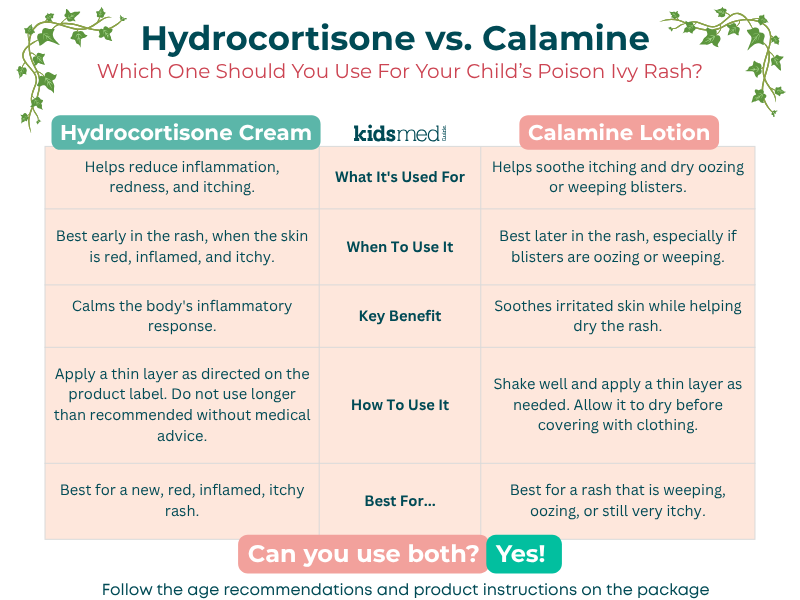
Hydrocortisone Cream
Over-the-counter hydrocortisone cream is a low-potency topical steroid that can be purchased at any pharmacy or grocery store and is approved for ages 2 and older.
Note: some products may have older age requirements; always read the product label.
Hydrocortisone cream may help reduce:
- Redness
- Itching
- Inflammation
Hydrocortisone cream tends to work best early in the reaction, before the rash becomes severe or develops significant blistering.
Hydrocortisone safety tips:
- Use only as directed
- Avoid prolonged overuse (usually around 7 days); ask your pediatrician for guidance for longer use
- Avoid applying to the face, diaper area, or near the eyes unless instructed by a healthcare provider
- Do not put on broken skin or wounds
- Do not use in children under age 2 unless directed by a doctor
Calamine Lotion
Calamine lotion has been a well-known remedy for generations. Grandma would recommend it! You can buy it at the drugstore, and it helps dry out oozing blisters and relieve itching.
Calamine lotion can be used with hydrocortisone cream. Like hydrocortisone, it's usually recommended for ages 2 and up unless otherwise directed by a doctor. Always verify the age recommendations on the package label.
Colloidal Oatmeal Baths
Colloidal oatmeal baths are medication-free and may temporarily soothe irritated skin. Follow the package directions, and ask your pediatrician before using a new skin product on an infant.
The oatmeal solution is mixed with cool or lukewarm water, and the affected body part is soaked for about 15 minutes... or however long you can get your child to stay still 😂
You can also add it right to a cool bathtub. They can be especially helpful for:
- Widespread rashes
- Sensitive skin
- Nighttime itching that makes it difficult to sleep
Domeboro® Soaks
For poison ivy that is extra weepy or blistering, your healthcare provider may recommend aluminum acetate soaks (Domeboro®).
Domeboro soaks can help dry out the weepy rash or relieve itching. Always follow the age recommendations on the package or your doctor's guidance, and follow the package instructions closely when preparing the solution.
Do Antihistamines Help Poison Ivy?
This is a common question! You hear "itch," and you think "antihistamine!"
Antihistamines do not treat the allergic skin reaction itself, but they may help some children feel more comfortable.
Cetirizine (Zyrtec)
Cetirizine is a second-generation antihistamine. It may help reduce itching in some children and usually causes less drowsiness than first-generation antihistamines like Benadryl.
Benadryl
Benadryl (generic name: diphenhydramine) is not routinely recommended for children.
Benadryl may:
- Cause significant drowsiness
- Cause hyperactivity in some children instead of sleepiness
- Have significant side effects, especially if a child accidentally receives too much
If you want to try an antihistamine to see if it relieves some of your child's discomfort, stick with a second-generation product like cetirizine (Zyrtec). I recommend avoiding Benadryl unless your pediatrician specifically recommends it.
Topical Benadryl
Topical Benadryl creams and sprays are not recommended, as they don't really help and may worsen skin irritation or trigger another allergic skin reaction.
When Are Prescription Medications Needed?
Some children develop reactions that are too severe for over-the-counter treatments alone. If your kid is totally miserable or the rash is concerning to you, reach out to your pediatrician!
A pediatrician may prescribe:
- Stronger topical corticosteroids
- Oral corticosteroids such as prednisone or prednisolone
Oral steroids work by calming the body's immune response systemically (i.e., from within the body) and are often used for severe or widespread poison ivy.
Depending on the severity of the reaction and the prescribed treatment length, oral steroids may need to be gradually tapered rather than stopped suddenly. Poison ivy can rebound when systemic steroid treatment is too short, so follow the prescription exactly and complete the full course.
Parents should contact their child's pediatrician if poison ivy:
- Involves the face
- Affects the eyes
- Covers a large area of the body
- Causes severe swelling
- Makes eating or sleeping difficult
- Infection is suspected (redness, warmth, pus, fever)
Treatments Parents Should Avoid
Unfortunately, the internet is full of home remedies and gimmicky products from people trying to sell you stuff, many of which may do more harm than good.
Avoid putting the following on poison ivy:
- Bleach
- Gasoline
- Essential oils
- Rubbing alcohol
- Topical Benadryl products
- Harsh chemicals
- Be wary of targeted marketing products for all-natural or homeopathic remedies - check with your pharmacist or pediatrician first
Should Poison Ivy Blisters Be Popped?
No. Although it can be tempting, blisters from poison ivy should be left alone. Try to get your kids to stop touching or picking at the rash. (Easier said than done, I know!)
Popping blisters may:
- Increase irritation
- Delay healing
- Increase the risk of a bacterial skin infection (fingernails are germy!)
Fun fact: the fluid inside poison ivy blisters does not contain urushiol and cannot spread the rash. Popping and scratching just slows the healing process.
Is Poison Ivy Contagious?
Nope!
Your child cannot give poison ivy to classmates, siblings, or other family members simply by touching the rash.
However, urushiol oil left on contaminated objects can continue causing reactions until it has been thoroughly washed away. This is where the contagious myth comes from.
Items that should be cleaned include anything your child was using at the time of exposure, as well as anything they could have used in the interim before you got them and their belongings cleaned up.
- Clothing
- Shoes
- Towels
- Sports equipment
- Gardening gloves
- Pet fur
- Backpacks
- Toys
When Should Parents Worry About Infection?
Although poison ivy itself is not an infection, scratching can damage the skin and allow bacteria to enter, leading to a secondary infection.
Contact your pediatrician if your child develops:
- Pus
- Increasing pain
- Fever
- Warmth around the rash
- Rapidly spreading redness
- Significant swelling
A suspected skin infection should be assessed by a healthcare provider. If a bacterial infection is confirmed, topical or oral antibiotics may be prescribed depending on its location and severity.
This is not common, but it is not uncommon either... young children have a hard time resisting the urge to scratch! And they don't always have the cleanest little fingers...
How Long Does Poison Ivy Last?
Most poison ivy rashes improve within one to three weeks, though mild cases may resolve sooner.
More severe reactions may last longer, especially if a child had a large exposure (rolling around in the leaves?) or required prescription steroid or secondary antibiotic treatment.
How Can Parents Prevent Poison Ivy?
The best tip to prevent poison ivy is to avoid it! That can be hard to do. Kids should play outside whenever they can. Fresh air and sunshine! But kids are also magnets for finding trouble.
Teach your children to recognize poison ivy and, in general, not to play in areas that are thick with weeds or brush. This will also help reduce exposure to ticks.
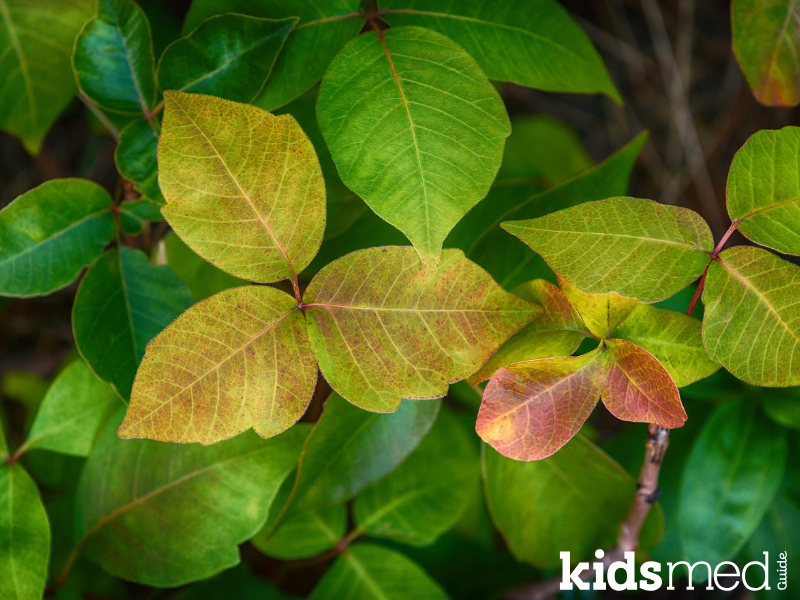
The old rule of thumb is "leaves of 3, let it be!" Poison ivy is distinctive with its 3-leaf pattern. If your older kids can recognize it, hopefully they can avoid it.
Parents can also encourage the following:
- Wear long sleeves and pants when playing or hiking in wooded areas
- Wash exposed skin after outdoor activities
- Wash skin, clothing, and belongings immediately if you suspect poison ivy exposure
- Clean shoes and outdoor equipment regularly
- Bathe pets after hiking or playing in wooded areas, as they can transmit the oil to their human families
Final Thoughts
Poison ivy in kids can usually be managed at home using cool compresses and products like calamine lotion or hydrocortisone cream.
If the rash is severe (i.e large areas or on areas such as the face) or you suspect an infection, reach out to your pediatrician.
And remind your kids - "Stay out of the bushes." 😄 Will they follow that advice? Probably not.
Frequently Asked Questions
What Is The Best Treatment For Poison Ivy In Kids?
Most cases of poison ivy can be managed at home with supportive care. Cool compresses, over-the-counter hydrocortisone cream, calamine lotion, colloidal oatmeal baths, and oral antihistamines may help relieve itching as the rash heals.
Does Benadryl Help Poison Ivy?
Oral Benadryl (diphenhydramine) is not routinely recommended for children and should be given only if advised by your pediatrician. Topical Benadryl products are generally not recommended because they may worsen skin irritation.
Can Poison Ivy Spread By Scratching?
No. Scratching does not spread poison ivy. However, it can break the skin, increase irritation, and raise the risk of a bacterial skin infection.
Is Poison Ivy Contagious?
No. The rash itself is not contagious. The only thing that spreads poison ivy is urushiol oil, which can remain on clothing, shoes, pets, or outdoor equipment.
Can Poison Ivy Spread Through Blister Fluid?
No. The fluid inside poison ivy blisters does not contain urushiol and cannot spread the rash.
When Should Poison Ivy Be Seen By A Doctor?
Parents should contact their pediatrician if poison ivy:
- Involves the face or eyes
- Covers a large area of the body
- Causes severe swelling
- Makes eating or sleeping difficult
- Shows signs of infection such as pus, fever, increasing redness, or worsening pain
How Long Does Poison Ivy Last?
Most poison ivy rashes improve within 1 to 3 weeks, although mild cases may resolve sooner and more severe reactions may last longer.
Parents Also Read
 KidsMedMom Andrea M., PharmD, BCPPS
 KidsMedMom Andrea M., PharmD, BCPPS
 KidsMedMom Andrea M., PharmD, BCPPS
References:
Allergic Contact Dermatitis | Boston Children’s Hospital. (n.d.). Retrieved July 14, 2026, from https://www.childrenshospital.org/conditions-treatments/allergic-contact-dermatitis
Butt, M., Flamm, A., Marks, J. G., & Flamm, A. (2022). Poison Ivy Dermatitis Treatment Patterns and Utilization: A Retrospective Claims-based Analysis. Western Journal of Emergency Medicine, 23(4), 481–488. https://doi.org/10.5811/westjem.2022.March.55516
CDC. (2026, April 23). Poisonous Plants and Work. Outdoor Workers. https://www.cdc.gov/niosh/outdoor-workers/about/poisonous-plants.html
DailyMed—BASIC CARE HYDROCORTISONE- hydrocortisone cream. (n.d.). Retrieved July 14, 2026, from https://dailymed.nlm.nih.gov/dailymed/drugInfo.cfm?setid=a0d0e82b-03ff-4d43-9be0-0e414ee49970
DailyMed—DOMEBORO- aluminum sulfate tetradecahydrate, calcium acetate monohydrate powder, for solution. (n.d.). Retrieved July 15, 2026, from https://www.dailymed.nlm.nih.gov/dailymed/drugInfo.cfm?setid=28c39200-2f7c-954b-3ce7-7349b2738812
DailyMed—PREDNISONE tablet. (n.d.). Retrieved July 15, 2026, from https://www.dailymed.nlm.nih.gov/dailymed/drugInfo.cfm?setid=aa0b1582-6ef3-4697-9ea6-5391e6e57853
Gabros, S., Nessel, T. A., & Zito, P. M. (2026). Topical Corticosteroids. In StatPearls. StatPearls Publishing. http://www.ncbi.nlm.nih.gov/books/NBK532940/
Poison ivy, oak, and sumac: How can I prevent a rash? (n.d.-a). Retrieved July 14, 2026, from https://www.aad.org/public/everyday-care/itchy-skin/poison-ivy/prevent-rash
Poison ivy, oak, and sumac: How to treat the rash. (n.d.-b). Retrieved July 14, 2026, from https://www.aad.org/public/everyday-care/itchy-skin/poison-ivy/treat-rash
Poison ivy, oak, and sumac: What does the rash look like? (n.d.-c). Retrieved July 14, 2026, from https://www.aad.org/public/everyday-care/itchy-skin/poison-ivy/what-rash-looks-like
Poison ivy, oak, and sumac: What should I do if I touch a plant? (n.d.-d). Retrieved July 14, 2026, from https://www.aad.org/public/everyday-care/itchy-skin/poison-ivy/touch-plant
Poison ivy, oak, and sumac: When does the rash appear? (n.d.-e). Retrieved July 14, 2026, from https://www.aad.org/public/everyday-care/itchy-skin/poison-ivy/rash-appear
Poison ivy, oak, and sumac: Who gets a rash, and is it contagious? (n.d.-f). Retrieved July 14, 2026, from https://www.aad.org/public/everyday-care/itchy-skin/poison-ivy/who-gets-contagious
Poison Ivy, Poison Oak & Poison Sumac Rash: How to Avoid or Treat It. (2025, June 27). HealthyChildren.Org. https://www.healthychildren.org/English/health-issues/conditions/skin/Pages/Poison-Ivy-Treatment.aspx