Tick Bites in Kids: What to Do and When to Worry

Tick bites in kids are one of those things that can send parents into a spiral. Especially if you live in an area where Lyme disease is prevalent.
Unfortunately, ticks are common where I live, and my family spends a lot of time outdoors walking the dog. The pup is a magnet for ticks. They are so gross and make me so angry whenever I find one.
I love all animals and all living things, but if ticks could disappear forever, I wouldn't be upset (sorry, entomologists).
The best way to avoid tick bites is to avoid ticks. But if you find a tick on your child, don't panic! This guide explains what to do and when to call your pediatrician.
What to Do After a Tick Bite
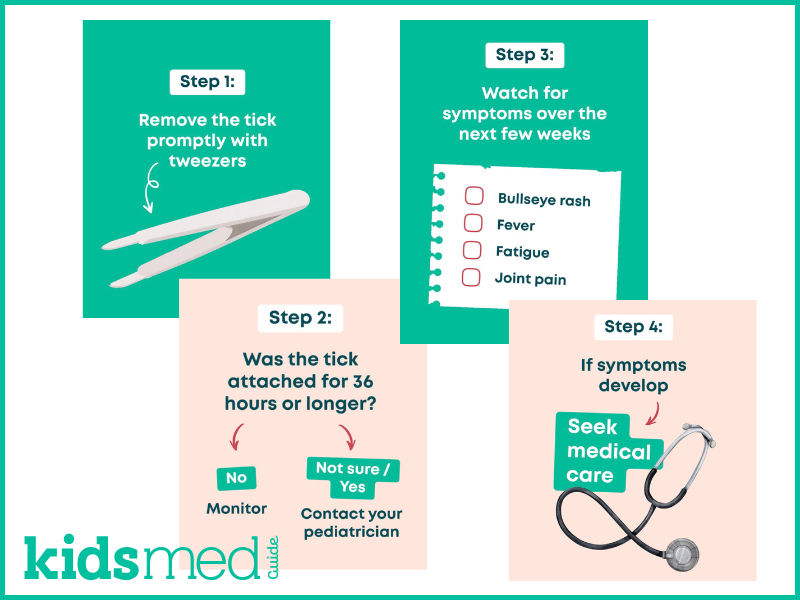
If you find a tick on your child, the first step is always to remove it quickly!
Use fine-tipped tweezers, grasp the tick as close to the skin as possible, and pull straight out with steady pressure. Avoid twisting or squeezing the body of the tick.
The goal is to pull the whole thing (head included) out in one clean sweep, without having to dig around and torture your child.
Inspect the area closely to see if you got the whole tick, or if any parts remain in the skin.
After removal:
- Clean the area with soap and water
- Wash your hands
- Dispose of the tick (kill it in alcohol or flush it down the toilet - don't squish it)
You may want to take a picture of the tick or, once it is dead, save it in a small plastic container for identification.
Understanding Lyme Risk After a Tick Bite
Tick bites are scary because ticks can carry and transmit diseases such as Lyme disease (though there are many other tick-borne diseases, too).
Key point: Not every tick bite causes Lyme disease.
The risk depends on a few factors:
- Type of tick (deer tick vs others)
- How long has it been attached?
- Geographic location
For parents, the duration of attachment is one of the most important factors to consider when it comes to disease transmission. How long was that little stinker on there?!
When to Monitor vs Call the Pediatrician
Antibiotic prophylaxis (which means a dose of antibiotics to try to prevent an infection before it takes hold) is sometimes warranted, depending on how long the tick was attached and whether it had a chance to transmit disease to the human it bit.
This can get tricky! The magic number, according to the Infectious Disease Society of America, is 36 hours.
- If the tick was attached for less than 36 hours:
→ Monitor at home - If the tick was attached for 36 hours or longer, OR you are not sure:
→ Contact your pediatrician
This cutoff is based on guideline-based criteria for determining whether preventive antibiotics may be considered in higher-risk situations. If the tick may have had time to transmit disease, antibiotic prophylaxis may be warranted.
If you’re unsure how long the tick was attached (which is common), it’s reasonable to check in with your pediatrician!
In my experience, with little kids, parents can often confidently tell whether a tick is newly attached. Little kids need help getting dressed and taking baths, and parents usually notice things like ticks.
With older, more independent children, it can be tricky. If you're unsure, call your pediatrician. They will ask questions to help you determine the likely duration of attachment, such as whether the tick is engorged or how firmly it's attached.
Symptoms to Watch For
Whether you've called the pediatrician or not, or whether you've started antibiotic prophylaxis in your child or not, it's important to monitor the tick bite site and your child's overall health.
Watch for these symptoms after a tick bite:
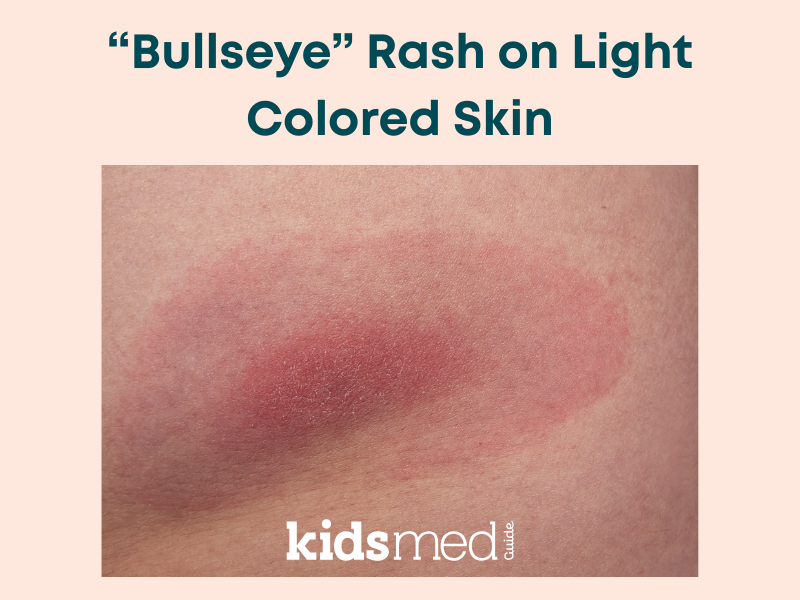
- Bullseye rash (erythema migrans) -> this can look different in kids and in people with darker skin tones. Sometimes there is no characteristic "bullseye" but rather a diffuse, red or pink, patchy-looking rash.
- Fever
- Fatigue
- Joint pain
Remember, the rash does not always look like a perfect target, and it may expand over time. It also may not always appear exactly at the site of the bite, so keep an eye on your child's overall health.
If any of these symptoms develop, call your doctor. Note the date of the tick bite and, if known, the tick species (reference that picture!). But if your child has any symptoms, they should be evaluated.
Do Kids Need Antibiotics After a Tick Bite?
Not all tick bites require antibiotics. If the tick was not attached for 36 hours or greater, or if there is no Lyme disease in your geographic area, your child may not need antibiotics.
Additionally, preventative antibiotics are only useful if started within 72 hours of finding the tick.
Antibiotics may be considered depending on:
- Tick type (is the species known for carrying Lyme disease?)
- Duration of attachment (≥36 hours)
- Time since removal (within 72 hours)
- Local Lyme prevalence
In these cases, a pediatrician may consider a single dose of an antibiotic such as doxycycline, depending on age and current recommendations.
For most children, if a tick is found and removed promptly, monitoring is all that is needed!
Common Mistakes to Avoid
- Not all tick bites require preventive antibiotics
- Relying on home remedies like alcohol instead of proper removal with tweezers
- Watching the bite site instead of watching for symptoms everywhere
- Waiting too long to seek care when symptoms appear
FAQ
Do all tick bites cause Lyme disease?
No. Most tick bites in kids do not lead to Lyme disease. Risk depends on tick type, location, and how long the tick was attached.
When should I call the doctor after a tick bite?
You should contact your pediatrician if:
- The tick was attached for 36 hours or longer
- You are not sure how long it was attached
- Your child develops symptoms
Can Lyme disease be prevented after a tick bite?
In certain higher-risk cases, a pediatrician may recommend a single dose of antibiotics to reduce the risk of Lyme disease.
What does a Lyme disease rash look like?
The classic rash is a bullseye pattern, but it can also appear as a solid expanding red area. It usually develops several days after the bite.
Should I save the tick?
You can, but it is not required. Identification can sometimes help, but management decisions are usually based on clinical factors.
Conclusion
When it comes to tick bites in kids, remember:
- Remove the tick promptly
- Assess how long it may have been attached
- Monitor for symptoms
If the tick was attached for 36 hours or more, or you are unsure, check in with your pediatrician.
References:
CDC. (2026, February 18). What to Do After a Tick Bite. Ticks. https://www.cdc.gov/ticks/after-a-tick-bite/index.html
IDSA. (n.d.). Lyme Disease. Retrieved April 13, 2026, from https://www.idsociety.org/practice-guideline/lyme-disease/