How To Get Kids To Take Medicine Without A Battle: Pediatric Pharmacist Tips

I don’t like to brag, but I consider myself a bit of an expert at giving yucky medicine. I worked for years at a children’s hospital, where I learned all the tricks of the trade from superstar pediatric nurses. Between nursing and pharmacy, we usually found a solution even the most discerning child could tolerate.
Once I had my own kids and had to start tricking them into taking medicine at home, I still considered myself an expert. However, I gained a newfound respect for the nurses who were actually administering the medicine. It’s definitely easier on the pharmacy side of the phone!
Read on for my pharmacist-approved medication administration tips to help doses go down smoothly… or at least prevent World War 3 in your kitchen.
Why Kids Refuse Medicine
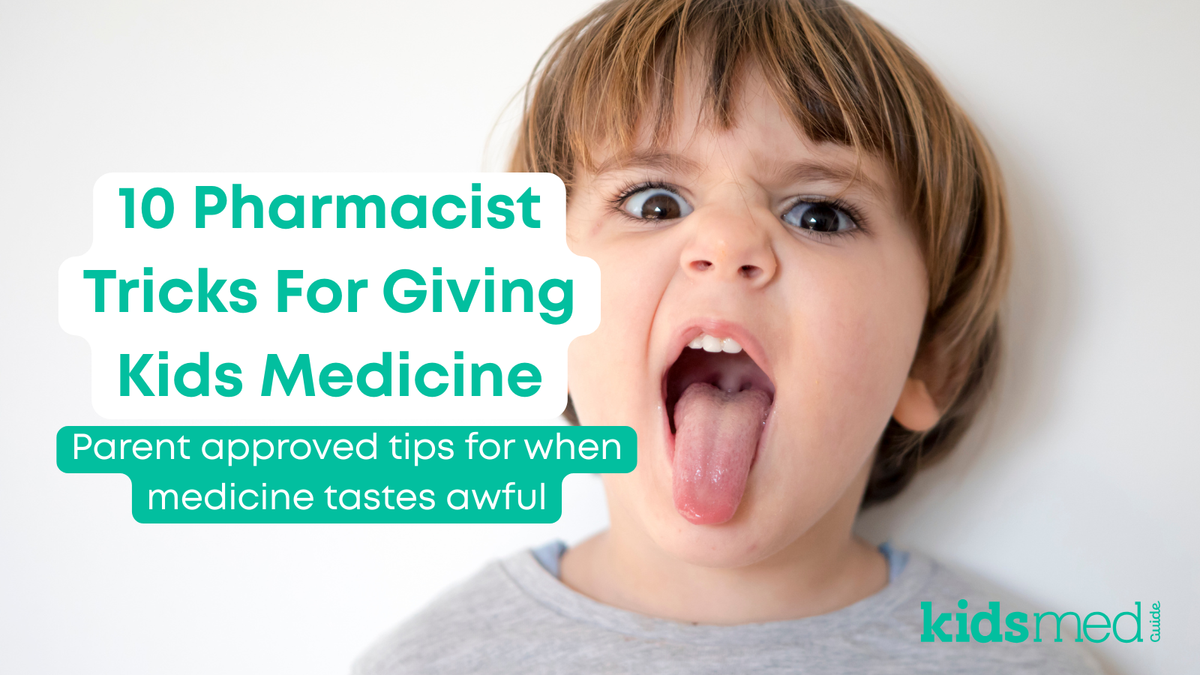
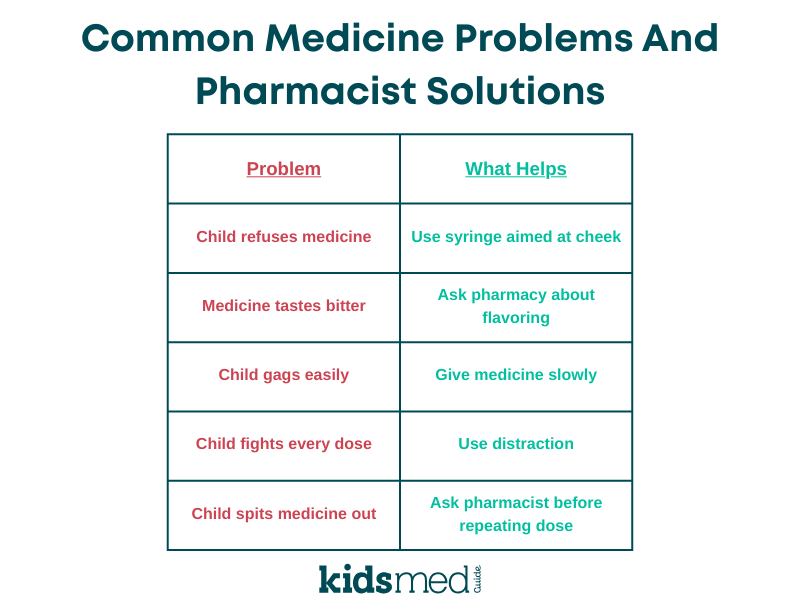
If your child refuses medicine, you are not alone. Many medications taste bitter or unpleasant, and young children have very sensitive taste buds. Toddlers are also naturally independent and may resist anything they feel forced to do. Put on socks? No thank you!
Common reasons children refuse medication include:
- Bitter, minty, chalky, or unpleasant taste
- Fear or anxiety about illness in general
- Gagging with thick liquid medicines or weird textures
- Desire for independence (especially in toddlers!)
So how do we, well-meaning, loving, but also tired, exhausted, and frustrated parents manage? Read on for our 10 top tips!
1) Use A Dosing Syringe Instead Of A Cup
Properly marked dosing cups work for medicine your child willingly drinks. However, for babies and young toddlers, an oral syringe is usually best.
Dosing syringes help ensure the full dose reaches your child’s mouth and goes past their taste buds. The nurses taught me to aim the syringe toward the inside of the cheek and squirt small amounts slowly. It may take longer, but children are much more likely to swallow the medicine instead of spitting it out.
Always aim toward the inside of the cheek near the back of the tongue. Never squirt medicine directly into the throat; it could cause choking or aspiration.
2) Distraction Is Your Best Friend
Distract your child with anything possible. Funny faces, songs, poop jokes, Ms. Rachel, the ceiling fan on high… literally anything you know will capture their attention.
If your child normally does not get screen time, this may be the moment to break the rules. Cocomelon® for the win!
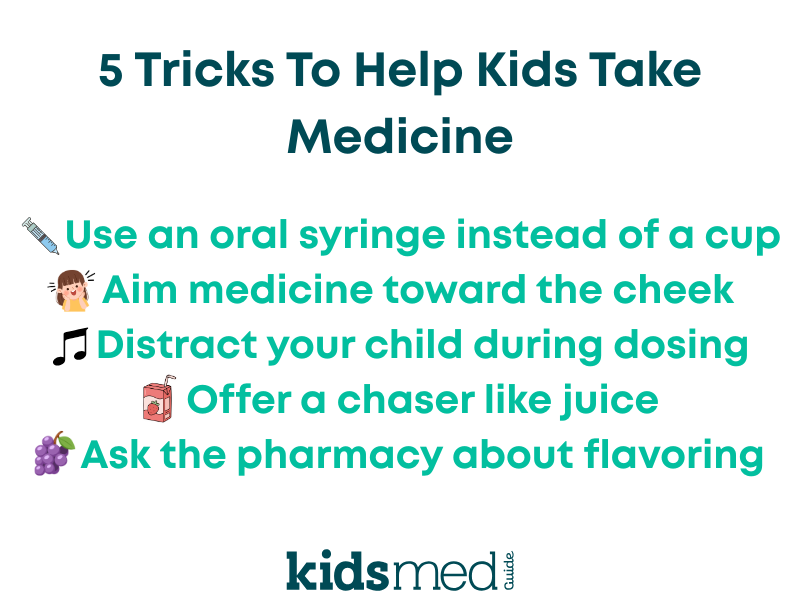
3) Ask Your Pharmacist About Flavoring
Ask your friendly neighborhood pharmacist if the medication can be flavored. Many pharmacies offer flavor options such as bubblegum, grape, or strawberry to help mask bitterness.
Please be patient when requesting this. Retail pharmacists are often extremely busy, and flavoring medications takes time.
Pharmacists must check compatibility between the medication and the flavoring ingredients. Some medicines are bitter, sour, or minty and require different masking agents. The way the medication is suspended in liquid and the inactive ingredients can also affect which flavors are safe to use.
4) Use A Strategic “Chaser”
Give your child a small chaser immediately after the medicine. A sip of juice, a spoonful of applesauce, a popsicle, or even a mini chocolate chip can help mask the unpleasant taste.
Some nurses even recommend a small amount of chocolate syrup!
Always check the medication instructions first. Some medications must be taken without food or cannot be taken with certain foods, such as dairy.
5) Cold Medicine May Taste Better
If the medication labeling or your pharmacist indicates it is safe, refrigerating liquid medicine can sometimes make it taste better.
Cold temperatures slightly numb the taste buds, which can help reduce bitterness. Think about that very unpleasant glucose drink given during pregnancy diabetes screening. It definitely tastes better when cold.
6) Rewards And Routines Can Help
Sticker charts, small rewards, or a favorite toy can help motivate children to take medicine. The key is consistency. Make medicine part of the routine: medicine, praise, then reward.
Kids often respond better when they know what to expect.
My toddler sees right through this strategy and laughs in my face when I suggest a sticker chart or a trip to the dollar store. But maybe your toddler will fall for it.
7) Mix Medicine With Food Carefully
Use caution before mixing medication into a full bottle or cup of food or drink. If your child does not finish all of the food/drink, there is no way to know how much medication they actually received.
Instead, ask your pharmacist if the medication can be mixed with a small spoonful of food such as pudding, yogurt, or applesauce.
Some medications cannot be mixed with food, must be taken on an empty stomach, or cannot be combined with certain foods such as dairy products or acidic juices like OJ. Always ask your pharmacist first.
8) Use The Buddy System
Let a favorite stuffed animal “take” the medicine first. Then your child can bravely go next.
Role-playing can help reduce anxiety and resistance. Playing doctor or nurse is also a great way to address medical anxiety. If you have a doctor kit at home, bring it out and talk about why the dolls and stuffed animals need their medicine.
9) Let Your Child Have Some Control
For older toddlers and children, letting them hold the syringe and decide how quickly to take the medicine can help them feel more in control.
Use caution with this strategy, especially with expensive or potentially dangerous medications.
However, for a pre-measured dose of acetaminophen that you have carefully checked, it may be reasonable to let your child slowly self-administer the dose from the syringe under supervision.
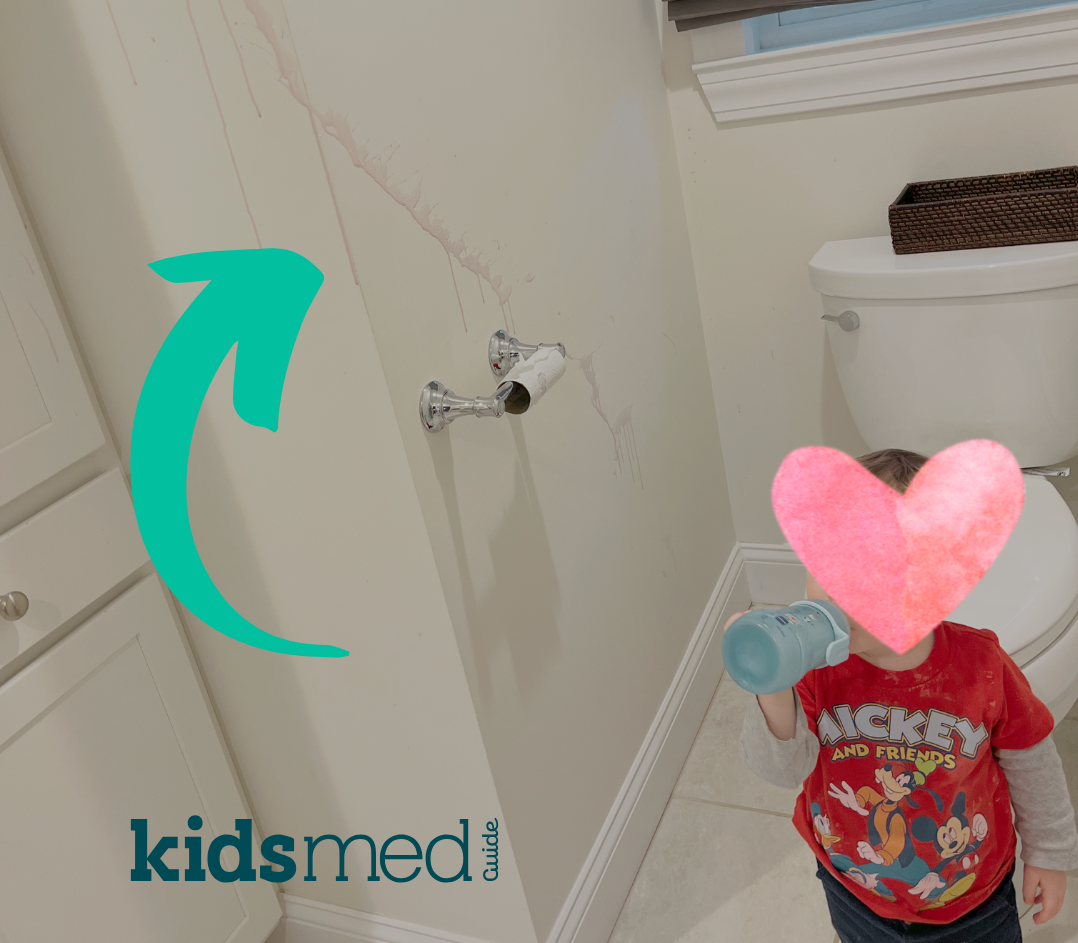
I say this with a grain of salt and while laughing at myself. Please enjoy this picture of the damage done to my walls when I let my two-year-old hold the medication syringe. Purple everywhere.
10) Explain Why The Medicine Is Needed
Older children, usually around age six or older, may respond well to an honest explanation about why they need the medication.
Explain that the medicine helps their body fight infection or feel better. Sometimes a calm conversation works better than forcing the medicine.
What To Do If Your Child Spits Out Medicine
If your child spits out medication, the next step depends on how much of the dose was lost.
If most of the medicine immediately comes back out, it may be reasonable to repeat the dose. If you are unsure how much your child swallowed, contact your pediatrician or pharmacist before giving another dose.
Related: What To Do If Your Child Vomits Medicine
If this happens frequently, your healthcare provider may be able to suggest alternative formulations, such as chewable or dissolvable tablets, or other medications.
Know When To Ask For Help
If your child consistently refuses medication, contact your pediatrician or pharmacist.
Sometimes alternative forms are available, such as chewable tablets, dissolvable tablets, rectal medications, or a different medication altogether.
In some cases, a child who refuses liquid medicine may surprisingly be able to swallow a small tablet without difficulty.
Pharmacists may also suggest creative options such as crushing tablets or opening capsules and mixing them with a spoonful of applesauce when appropriate.
Medication Safety Tips For Parents
- Never force medication into a child’s throat, which could cause choking or vomiting
- Always use a dosing device with milliliter markings provided by the pharmacy
- Never use kitchen spoons to measure medication
- Pay attention to storage requirements and expiration dates
- Never refer to medicine as candy or a treat
Teaching children early that only parents or caregivers should give medicine reinforces medication safety!
Frequently Asked Questions
Can I hide medicine in food?
Sometimes medications can be mixed with a small spoonful of food, like applesauce or yogurt. Always read the drug insert or check with your pharmacist first. Some medications can’t be taken with certain foods or must be taken on an empty stomach.
What if my child spits out half the medicine?
If you are unsure how much medication your child swallowed, contact your pediatrician or pharmacist before repeating the dose.
Can pharmacies make medicine taste better?
In many cases, yes! Many pharmacies offer added flavor that can help mask bitterness and improve medication tolerability in children.
Is it safe to crush pills for kids?
Some medications can be crushed or capsules opened, but others cannot. Always ask your pharmacist before altering medication formulations.
Related:
What to Do When Your Kid Spits Out Their Antibiotics
What to Do If Your Child Throws Up Medicine
References:
Durani, Y. & MD. (n.d.). Helping Kids Take Medicine. Retrieved June 11, 2025, from https://kidshealth.org/en/parents/take-medicine.html
Symptomviewer. (2017, June 24). HealthyChildren.Org. https://www.healthychildren.org/English/tips-tools/symptom-checker/Pages/symptomviewer.aspx?symptom=Medicine+-+Refusal+to+Take