The Summer Medication Mistakes Parents Make Most

Summer routines are different. Kids are outside more, traveling more, sweating more, sleeping less, and snacking more. Oh my goodness, the snacks. Some days, I don't think I leave the kitchen.
Don't let summer also bring medication mistakes! Hot weather and sunshine can also affect medications.
Most medications are sensitive to heat, humidity, sunlight, and improper storage. Summer medication storage is a big topic and important to get right. Hot temperatures could make your kid's medicine less effective.
Summer habits can also cause kids to miss doses or forget their medication entirely, or be prone to sun-induced side effects.
These are medication safety issues I routinely help families navigate, especially during summer travel and outdoor activities. To keep kids healthy and on track this summer (despite the never-ending snack train), we put together this ultimate summer medication safety guide!
Read on for the most common summer medication mistakes parents make and how to avoid them.
Leaving Medications In Hot Cars Or In The Sun
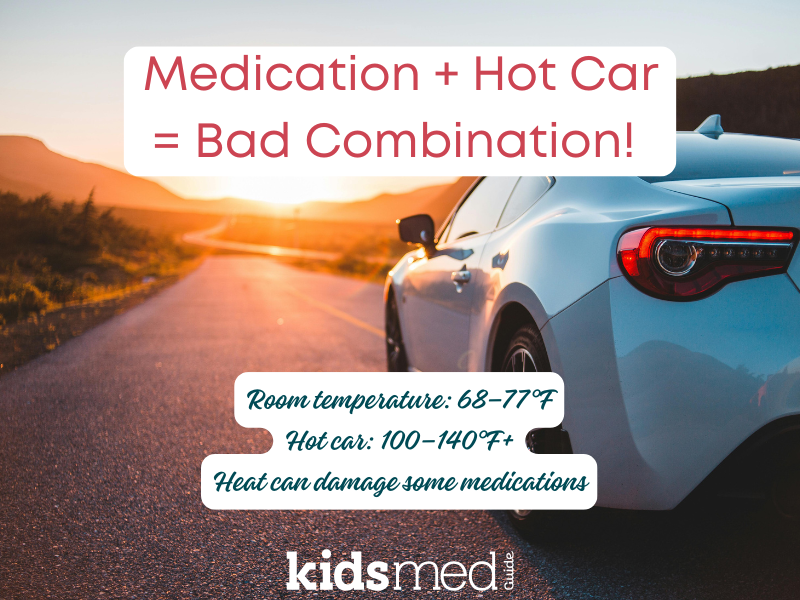
Many medications should not be stored in excessive heat. While storage requirements vary, room temperature is typically defined as 68°F to 77°F (20°C to 25°C).
Some medications can tolerate brief temperature excursions, often up to 86°F (30°C), but prolonged exposure to higher temperatures may affect their stability and effectiveness.
That's why it's important not to leave medications in a parked car. Even on a mild day, the temperature inside a vehicle can quickly exceed 100°F. On hot summer days, it can reach 140°F or higher!
Parents should also not store medications in the sun at the pool or beach, or in a backpack stored in the summer sun at camp.
Heat may damage or reduce the effectiveness of:
- Antibiotics
- Inhalers
- EpiPens
- Insulin
- Liquid medications
- Probiotics
Why It Matters
Extreme heat can cause medications to:
- Break down chemically (the drug's structure may be altered)
- Lose potency (strength)
- Become less reliable (not good!)
For medications like albuterol inhalers, epinephrine auto-injectors, or insulin, this can become a significant safety concern. Rescue medications need to retain their full potency.
How to Safely Store Medication in the Summer
The safest place to store most medications during summer is indoors at room temperature, away from direct sunlight and excessive heat.
If taking medication on the go or sending it to camp or on vacation:
- Keep it indoors at room temperature (or as dictated by the label) when possible
- Store in insulated bags with a cool pack if needed outdoors or while traveling
- Always store away from direct sunlight
Avoid leaving medication in:
- Cars
- Pool/beach bags
- Hot strollers
- Diaper bags or totes
Forgetting Emergency Medications During Outdoor Activities
Summertime means schools are out! For kids, that often means:
- Camps
- Sports
- Playgrounds
- Road trips
- Beaches
- Sleepovers
Parents are juggling snacks, sunscreen, snacks, towels, snacks, water bottles, snacks, and approximately 19 other things, so emergency medications are easy to forget. (But definitely don't forget the snacks.)
Important medications to always remember include:
- EpiPens
- Rescue inhalers
- Seizure medications
- Allergy medications
- Insulin
Quick Tip
Create a dedicated summer medication bag that always includes:
- Rescue medications in original packages with instructions
- Dosing syringes
- A medication list
- Emergency contacts
- A pocket for a cool pack if the bag is needed outdoors in the sun
Using Expired Sunscreen
Many families pull last year’s sunscreen out of a beach bag and hope for the best. Let's be honest. As a parent, I'm often thinking... "Welp, good enough!"
While I'm a big Type B Mom and Advocate of "Good is good enough," try to avoid expired sunscreen or sunscreen that's been left in a hot car for too long.
The problem is that expired sunscreen or sunscreen left in a hot car one too many times may degrade and become less effective. This ultimately results in reduced UV protection.
What Parents Should Do
Check:
- Expiration dates (if it's out of date - toss it!)
- Texture changes (did the layers separate or is it runny?)
- Unusual odor (yuck - toss it!)
If you notice any of the above changes, or if you know you left it in the car for too long, grab a new bottle.
Not Realizing Some Medications Increase Sun Sensitivity
This is so important! Certain medications can make children more sensitive to sunlight and increase the risk of sunburn. And this is a real, common (and uncomfortable) side effect.
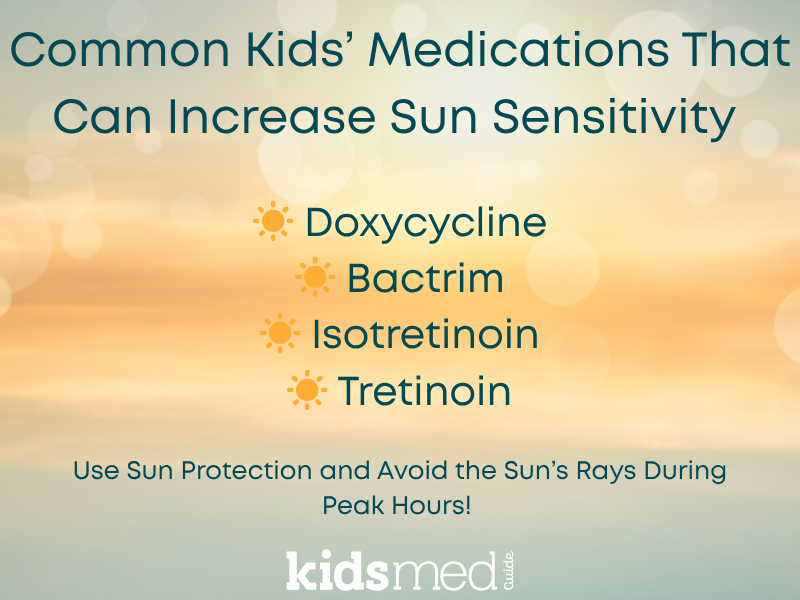
Common examples of children's medications that increase sun sensitivity include:
- Doxycycline and other tetracycline antibiotics
- Isotretinoin (Accutane)
- Topical retinoids such as tretinoin
- Sulfamethoxazole/trimethoprim (Bactrim)
Kids taking these medications may burn more easily or develop severe skin irritation.
If your child is on a medication that makes them more sensitive to the sun:
- Use sunscreen
- Dress them in UPF clothing and hats
- Avoid the sun during peak hours
- Get plenty of shade
Giving Dehydrating Medications Without Extra Fluids
Sunlight, heat, and fun summer activities can lead to dehydration. So can certain medications. Parents should be extra cautious and ensure their child is properly hydrated when playing outdoors in this situation.
Medications that may increase the risk of dehydration include:
- Stimulant medications
- Certain antihistamines
- Medications causing diarrhea
- Medications that suppress appetite
Make sure your kids drink regularly, urinate frequently, and take rest breaks!
Signs of dehydration in children may include:
- Dry mouth
- Fatigue
- Dizziness
- Dark urine
- Decreased urination
- Headache
Forgetting Doses or Medication
Summer means a new schedule (or lack thereof!). Kids may spend more time at friends' houses, at Grandma's, or at their other parent's home.
Many schools and camps have procedures in place to store medication and keep extra doses on hand, but in the summer, it gets tricky.
- Keep a written or electronic medication log if your child will be traveling between caregivers.
- Create a dedicated travel bag for medication if you anticipate many trips.
- Use a timer on your phone to remind yourself of doses (especially helpful if the dose would have been given elsewhere, such as at school or at the other parent's house!).
- Make sure camp counselors (and your camper!) are aware of medication needs and know how to safely store medicine away from heat.
- Know what to do if your child does miss a dose—call your pediatrician or pharmacist!
Final Thoughts
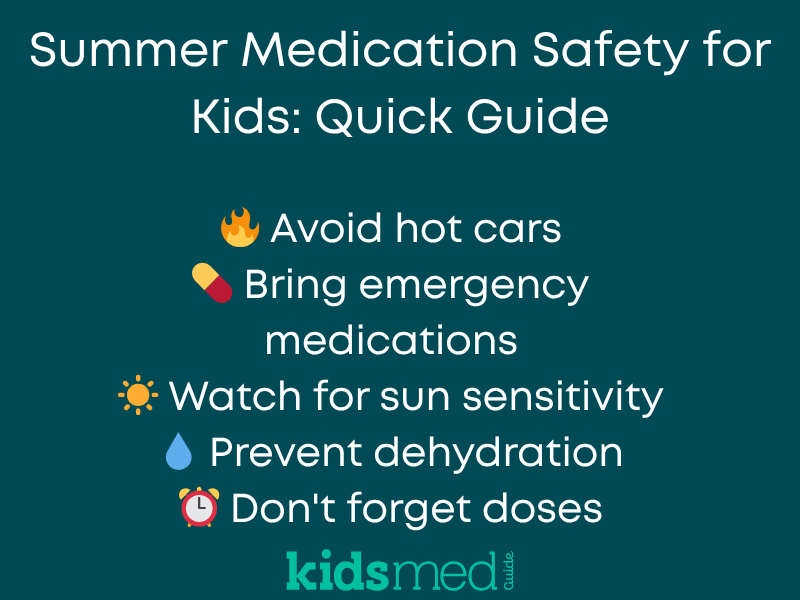
Avoid summer medication mistakes this holiday break! The key takeaways are:
- Avoid heat exposure and direct sunlight
- Check expiration dates
- Bring emergency medications everywhere and use a log or timer reminders to remember doses
- Keep your child hydrated and be aware of sun sensitivity from certain medications
- Enjoy the summer! 😀
Frequently Asked Questions
Can medications go bad in a hot car?
Yes. Extreme heat may reduce the effectiveness of many medications, including inhalers, EpiPens, insulin, and liquid medications. If a medication has been stored improperly, consult a pharmacist or the package insert for guidance.
Is expired sunscreen still effective?
Expired sunscreen may offer less reliable UV protection, especially if it has been repeatedly exposed to heat. When in doubt, get a new bottle.
Which medications can increase sun sensitivity?
Common examples used in children include doxycycline and other tetracycline antibiotics, isotretinoin (Accutane), topical retinoids such as tretinoin, and sulfamethoxazole/trimethoprim (Bactrim).
Can dehydration affect how medications work?
Yes. Dehydration may worsen medication side effects and increase the risk of dizziness, fatigue, or overheating. Rarely, dehydration can increase the risk of nephrotoxic (kidney-toxic) effects from some medications.
How should I store medication while traveling in the summer?
Most medications should be stored at room temperature and kept out of direct sunlight. When traveling, keep medications in their original containers and use an insulated bag with a cool pack if heat exposure is possible.
References:
CDC. (2025a, July 29). About Heat and Your Health. Heat Health. https://www.cdc.gov/heat-health/about/index.html
CDC. (2025b, September 18). Heat and Medications – Guidance for Clinicians. Heat Health. https://www.cdc.gov/heat-health/hcp/clinical-guidance/heat-and-medications-guidance-for-clinicians.html
Children and Medicine. (n.d.). Retrieved June 13, 2026, from https://www.consumermedsafety.org/safety-tips/children-and-medicine
Choosing a Summer Camp and Preparing Your Child: AAP Safety Tips. (2024, April 15). HealthyChildren.Org. https://www.healthychildren.org/English/safety-prevention/at-play/Pages/Choosing-a-Summer-Camp-and-Preparing-Your-Child.aspx
DailyMed—ACCUTANE- isotretinoin capsule, gelatin coated. (n.d.). Retrieved June 13, 2026, from https://dailymed.nlm.nih.gov/dailymed/drugInfo.cfm?setid=5b524a51-a16b-496e-b764-11c98c479c36
DailyMed—BACTRIM DS- sulfamethoxazole and trimethoprim tablet. (n.d.). Retrieved June 13, 2026, from https://dailymed.nlm.nih.gov/dailymed/drugInfo.cfm?setid=0138a156-859a-48a3-bf5a-e2db0cc7f2f9
DailyMed—DOXYCYCLINE capsule. (n.d.). Retrieved June 13, 2026, from https://dailymed.nlm.nih.gov/dailymed/drugInfo.cfm?setid=a894f4be-19e5-4785-8d0b-5e0d5626300e
DailyMed—TRETINOIN cream. (n.d.). Retrieved June 13, 2026, from https://dailymed.nlm.nih.gov/dailymed/drugInfo.cfm?setid=b5e385a2-f6f9-41cb-8a33-eedba397043f
Funk, O. G., Yung, R., Arrighi, S., & Lee, S. (2021). Medication Storage Appropriateness in US Households. Innovations in Pharmacy, 12(2), 10.24926/iip.v12i2.3822. https://doi.org/10.24926/iip.v12i2.3822
Medication Safety Tips for Families. (2025, November 12). HealthyChildren.Org. https://www.healthychildren.org/English/safety-prevention/at-home/medication-safety/Pages/Medication-Safety-Tips.aspx?_gl=1*1i3ogsl*_ga*MTU4MzExODcwNi4xNzgwODQ5MDgw*_ga_FD9D3XZVQQ*czE3ODEzODQyMzYkbzIkZzEkdDE3ODEzODQyNTYkajQwJGwwJGgw
Temperature Tips For Safe and Effective Medication Storage. (n.d.). Retrieved June 13, 2026, from https://www.baystatehealth.org/articles/medication-storage-temperature-guidelines
Top 10 Tips for Medicine Safety at Camp. (n.d.). Retrieved June 13, 2026, from https://www.consumermedsafety.org/top-ten-tips-lists/top-10-tips-for-medicine-safety-at-camp