Bug Spray Or Sunscreen First? What Parents Need To Know

Summer means more time outside, which also means parents are juggling sunscreen, bug spray, sweaty kids, and about 47 complaints about being hot, itchy, or bored.
Speaking of sunscreen... here's another question for ya. Which should be applied first, sunscreen or bug spray?
The answer actually matters! Using these products incorrectly can reduce their effectiveness and may increase skin irritation in some children.
But don't worry, we have you covered. Here is what parents should know about safely using bug spray and sunscreen together.
Why Families Often Use Both Sunscreen And Bug Spray Together
Both are often necessary for kids in the summer months!
In warm weather, children are often exposed to the following:
- Mosquitoes
- Ticks
- Sunrays
- Outdoor sports
- Camps
- Playgrounds
- Lakes and beaches
- Hiking
That means many families end up applying sunscreen and insect repellent at the same time. Outdoor adventures or nice woodsy camps expose kids to both harmful UV rays and bugs galore.
Sunblock and insect repellent work differently:
- Sunscreen protects skin from UV damage, including sunburns
- Bug spray repels insects by creating a barrier mosquitoes and ticks don't like
Does Sunscreen Or Bug Spray Go On First?
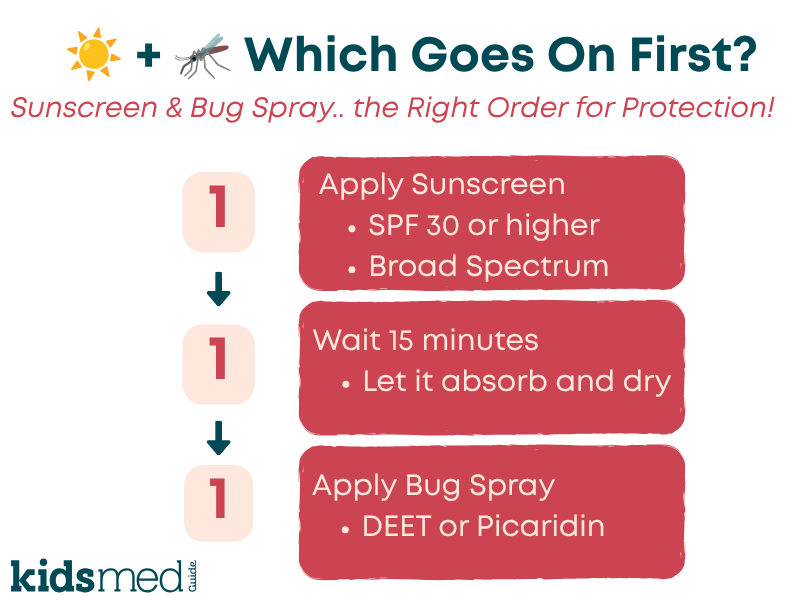
Sunscreen should be applied first.
The Centers for Disease Control and Prevention (CDC) and the American Academy of Pediatrics recommend the following:
- Sunscreen first
- Bug spray second
This allows the sunscreen to be absorbed into the skin (or settle on top of it) and begin protecting before the insect repellent is applied.
How Long Should You Wait Between Products?
When applying both sunblock and bug spray to children, ideally, parents would:
- Apply sunscreen
- Wait about 15 minutes
- Then apply bug spray
This timing helps maximize the effectiveness of both products. It's similar to your nighttime skincare regimen. Give each ingredient a little time to absorb in and work its magic!
Realistically, many parents are applying these products while a child is halfway out the door, wearing one shoe and clutching a popsicle, screaming "nooooo!"
If you cannot wait the full 15 minutes, applying sunscreen first and allowing at least a short drying period is still better than layering them randomly 😀
When all else fails, gather and slather. Slather on the sunblock (always fun on a moving target, a squirmy 3-year-old!) then hit them with the bug spray. We're all doing our best.
What Type Of Sunscreen Is Best For Kids?
There are so many options! Look for:
- Broad-spectrum SPF 30 or higher
- Water-resistant formulas
- Mineral sunscreens for young children or anyone with sensitive skin
- Lotion (not spray) products when possible
Mineral sunscreen options have ingredients like:
- Zinc oxide
- Titanium dioxide
These sit on the skin rather than being absorbed, and are often better tolerated in younger children and those with eczema or sensitive skin.
Read our Sunscreen for Kids! article for more tips.
What Type Of Bug Spray Is Safe For Kids?
The CDC recommends several effective insect repellents for children, including:
- DEET
- Picaridin
- Oil of lemon eucalyptus (do not use on children under age 3)
DEET
DEET is one of the most studied and effective insect repellents available.
Products containing:
- 10% DEET protects for about 2 hours
- 30% DEET protects for about 5 hours
Higher percentages last longer but do not work “stronger.”
For most families, concentrations between 10% and 30% are appropriate.
Picaridin
Picaridin is another excellent option that:
- Feels less greasy
- Has less odor
- Is effective against mosquitoes and ticks
Many parents prefer it because it tends to be gentler on the skin and the odor is less bothersome to anyone with sensitivities.
Are all these chemicals really safe?
Yes, when used in specific situations and as directed, they are safe for kids. Insect repellents mentioned here are extensively studied and approved by the EPA. But I get it! I never like giving my children unnecessary products or exposing them to extra chemicals, but I do consider bug spray and insect repellent necessary when they are playing in areas with known ticks or mosquitoes.
The risk and overall exposure from using bug spray while on a hike, playing at an outdoor, woodsy camp, or running around a lake are small to nonexistent compared to the risk from a tick or mosquito bite.
Bugs can and do transmit some very serious diseases.
At best, bug bites are itchy and uncomfortable; at worst, ticks and mosquitoes can cause serious infections. I do my best to prevent that by applying bug spray as needed!
Are Combination Sunscreen And Bug Spray Products A Good Idea?
In general, parents should avoid using combination bug-spray/sunscreen products. Why?
Sunscreen Needs Frequent Reapplication
Sunscreen often needs to be reapplied every 2 hours, especially after:
- Swimming
- Sweating
- Towel drying
And let's face it, kids often get sweaty & wet in the summer!
Bug Spray Usually Does NOT Need Frequent Reapplication
Applying bug spray more often than necessary may increase chemical exposure without improving protection. The insect repellent doesn't wear off as quickly, and applying more isn't always better.
Using separate products gives parents better control over:
- How much sunscreen is used
- How much insect repellent is used
- When each product is reapplied
The Site of Bug Spray and Sunscreen Application Matters:
Another reason to avoid combination products? Sunscreen needs to go pretty much everywhere the sun's rays might touch! Bug spray, however, has more rules.
Avoid applying bug spray:
- Near the eyes
- Near the mouth and nose
- On irritated skin
- On cuts or rashes
- Directly on hands in younger children
Young children often rub their eyes or put their hands in their mouths, so spraying hands directly is usually not ideal.
Instead, spray repellent into your own hands first, then gently apply it to your child, avoiding the face/mouth/nose area.
Can Babies Use Bug Spray?
For infants under 2 months old, insect repellents containing DEET should generally be avoided. Children aged 2 months to 2 years have sensitive skin, and DEET should be applied gently and sparingly as needed.
For infants:
- Use protective clothing
- Use stroller mosquito netting
- Avoid peak mosquito times (dusk and dawn) when possible
Can Babies Use Sunscreen?
- Babies under 6 months should primarily rely on shade and protective clothing and avoid the sun during peak hours, 10 AM to 4 PM.
- Small amounts of sunscreen may be applied to limited exposed areas if necessary. Wash off when possible.
What About Tick Protection?
In many regions of the United States, ticks are a major concern during the summer, especially in wooded or grassy areas.
Ticks carry many diseases that can be transmitted to humans, including Lyme disease. Ticks are endemic where I live, and I take my tick prevention and tick checks seriously.
For tick prevention:
- Use EPA-registered repellents
- Wear light colored clothing, including sneakers, socks, and pants that cover areas of skin likely to brush against ticks.
- Perform tick checks after outdoor activities
- Shower after spending time outdoors
Picaridin and DEET are both effective against ticks when used properly.
Practical Tips For Parents
Apply products outside when possible
This helps prevent inhaling spray, and the mineral-based sunblock is tough to clean off the floor! (Speaking from experience...)
Avoid overspraying
More product is not necessarily better. Follow the package directions.
Wash products off at the end of play or the day
Especially before bedtime! My kids always shower at the end of the day in the summer. Sunblock plus bug spray plus dirt and mud = tub time.
Reapply sunscreen more often than bug spray
This is one of the biggest reasons separate products are preferred. Sunscreen should be reapplied at least every 2 hours and whenever your child gets wet or sweaty.
Don’t forget commonly missed areas
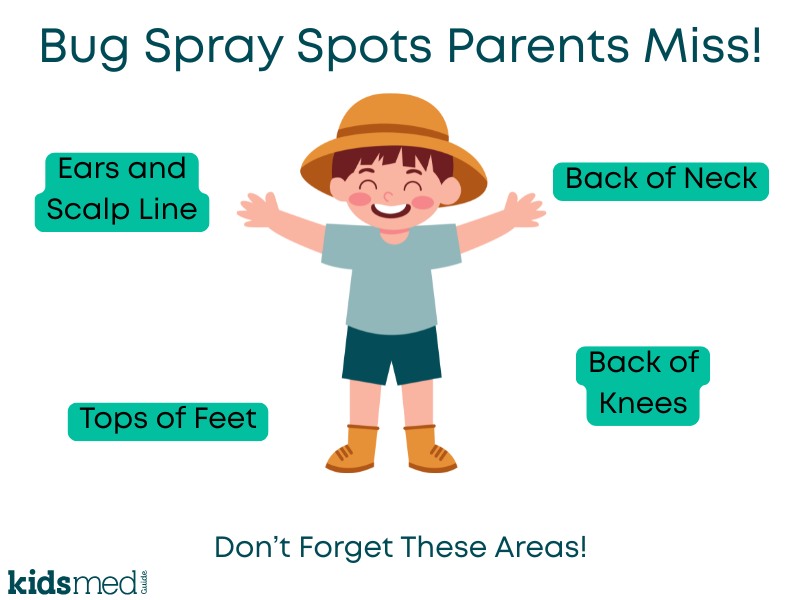
Parents frequently miss:
- Ears
- Tops of feet
- Back of neck
- Scalp lines
Unfortunately, mosquitoes and sunburn do not miss these spots! Mosquitoes aren't very discerning creatures.
Final Thoughts
Bug spray and sunscreen both have their place and are important! Using them correctly protects your kids from:
- Sunburn
- Long-term, irreversible sun damage
- Mosquito bites
- Tick exposure
- Skin irritation
The key takeaway: Use both products as needed, and when you need both, apply sunscreen first, then bug spray!

Frequently Asked Questions
Can I apply bug spray before sunscreen?
It is recommended to apply sunscreen first and bug spray second for best effectiveness. That said, do not skip the sunscreen if you've already applied bug spray first.
Is DEET safe for children?
Yes. When used as directed, DEET is considered safe and effective for children older than 2 months. Children under 2 years of age have sensitive skin, so bug spray should be applied gently. Consider dressing your child in long pants and shirts to reduce the amount of exposed skin.
What percentage of DEET should kids use?
Most children do well with products containing 10% to 30% DEET, depending on how long protection is needed.
Are combination sunscreen-and-bug-spray products recommended?
Generally, no. Sunscreen needs frequent reapplication, while bug spray usually does not. Sunscreen can and should be carefully applied to the face, whereas bug spray should be avoided around the mouth, nose, and eyes.
Can babies wear bug spray?
DEET is approved for safe use in babies greater than 2 months of age. If your baby needs bug spray, apply it gently and sparingly, and wash it off when no longer needed. Use long protective clothing or mosquito netting to increase protection.
Is picaridin better than DEET?
Both picaridin and DEET are effective. Picaridin has less odor and may be preferred.
References:
CDC. (2026, February 18). Preventing Mosquito Bites. Mosquitoes. https://www.cdc.gov/mosquitoes/prevention/index.html
How to Choose an Insect Repellent for Your Child. (2024, June 21). HealthyChildren.Org. https://www.healthychildren.org/English/safety-prevention/at-play/Pages/Insect-Repellents.aspx?_gl=1*mftwrf*_ga*MTU4MzExODcwNi4xNzgwODQ5MDgw*_ga_FD9D3XZVQQ*czE3ODA4NDkwNzkkbzEkZzEkdDE3ODA4NDkwODEkajU4JGwwJGgw
Sunscreen FAQs. (n.d.). Retrieved June 7, 2026, from https://www.aad.org/media/stats-sunscreen
US EPA, O. (2013, July 9). Repellents: Protection against Mosquitoes, Ticks and Other Arthropods [Collections and Lists]. https://www.epa.gov/insect-repellents