Why Isn’t My Child’s Antibiotic Working? What Parents Need to Know

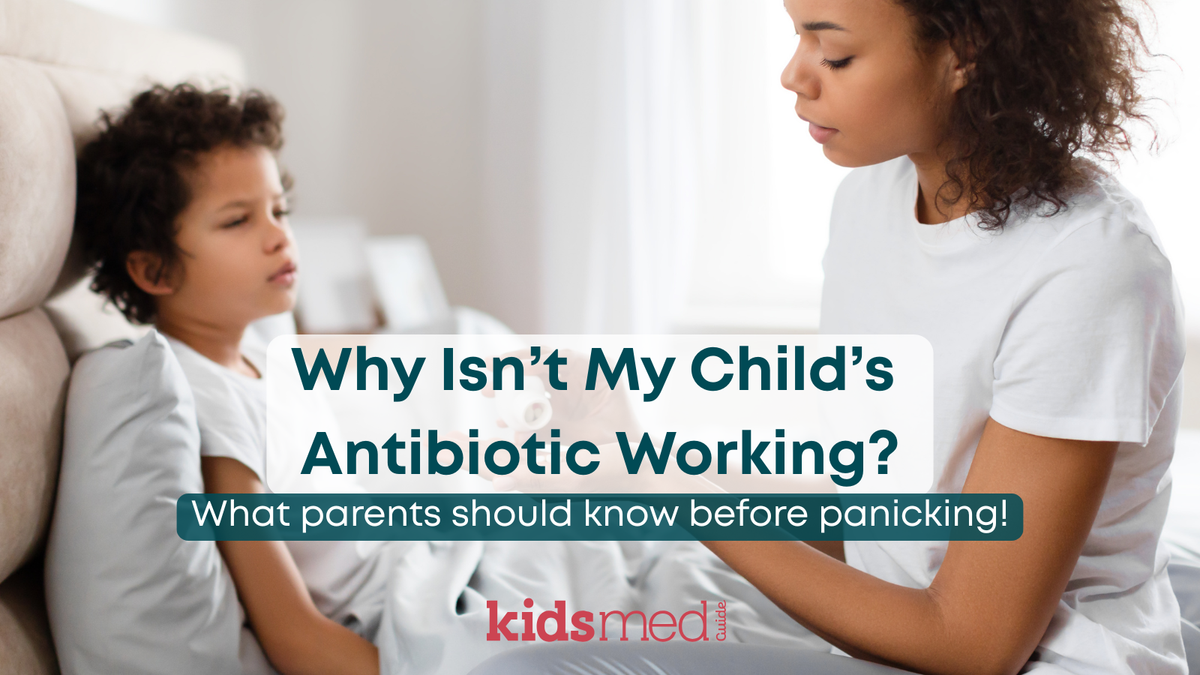
Few things are more frustrating than starting a new medicine for your child and seeing no improvement. When my kids are sick and need an antibiotic (or any medicine, really), I just want it to work!
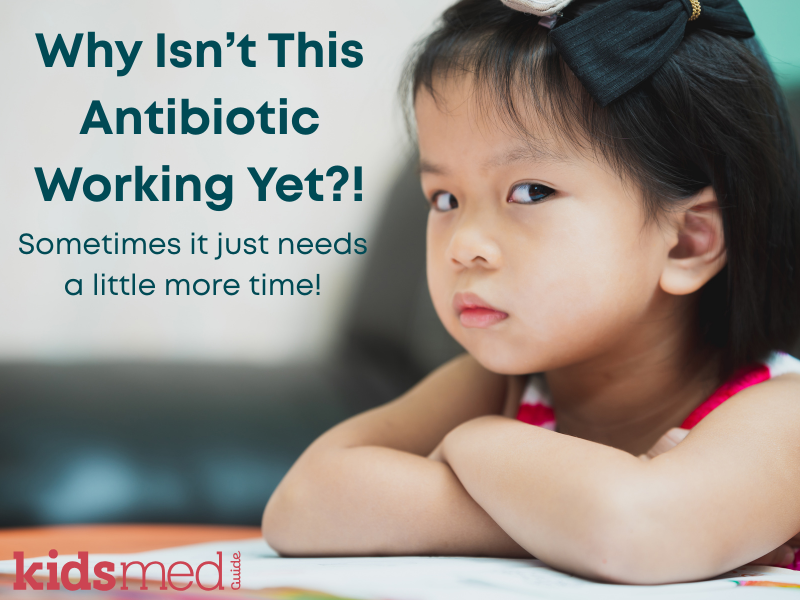
Most antibiotics take some time to be effective. So the good news is that if you've given a dose or two and haven't noticed any improvement yet, it probably just hasn't been long enough.
But in some cases, a lack of improvement indicates you should contact your child's doctor sooner rather than later.
How Long Do Antibiotics Take to Work in Kids?
Most antibiotics for kids do not work immediately. Even when the medication is the right one, it takes time for the bacterial load to decrease and for symptoms to improve.
Remember, what makes kids feel crummy is not always the bacteria themselves, but the effects they cause, like inflammation. Once the bacteria begin to die, it also takes time for the body to recover.
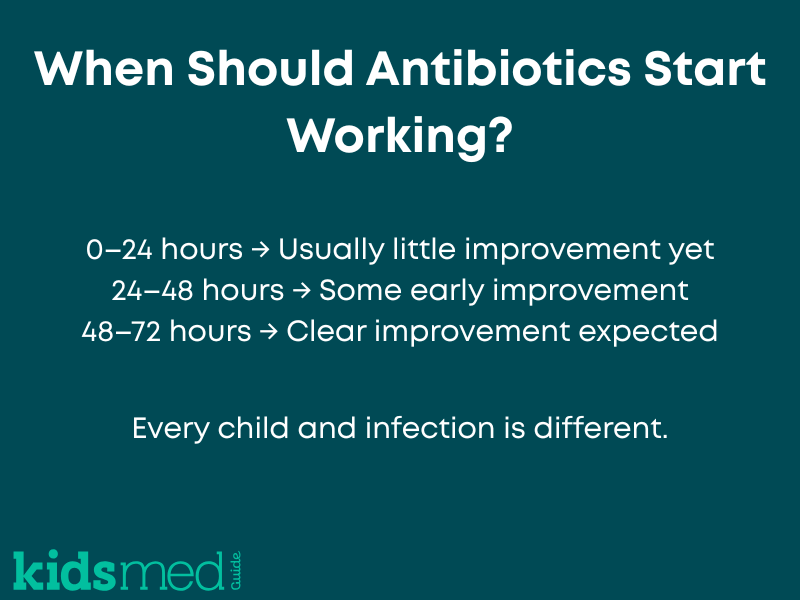
Here’s a general timeline:
- First 24 hours: Little to no improvement is expected
- 24–48 hours: Early signs of improvement may begin
- 48–72 hours: Clear improvement should be noticeable
If your child is still uncomfortable after a day or two, that does not necessarily mean the antibiotic is failing.
Common Reasons an Antibiotic May Not Seem to Work
1. It’s Too Early
This is the most common reason. Antibiotics need time to take effect. Symptoms often lag behind bacterial elimination, especially with things like ear or sinus infections.
Some antibiotics also need to reach a certain concentration in the body or be present for a longer period of time before positive effects are seen.
2. The Illness Is Viral, Not Bacterial
Antibiotics only treat bacterial infections.
If your child has a viral illness (which is very VERY common in kids), symptoms will not improve with antibiotics. This can happen when:
- Early symptoms overlap (for example, sore throat or fever from strep throat, followed by a viral infection that also causes a sore throat)
- Testing was not definitive, or there was a false positive lab result
- The illness evolved or changed after the visit
3. The Antibiotic Isn’t the Right Match
Not all bacteria respond to all antibiotics.
Sometimes:
- The bacteria are resistant
- The infection requires a different antibiotic
- The infection location limits effectiveness (not all antibiotics can reach the ears, for example)
This is more likely if symptoms do not improve after 72 hours or worsen between 24 and 48 hours.
4. Dosing or Administration Issues
This one is easy to overlook, but important to think about!
Antibiotics may not work as expected if:
- Doses are missed (use a medication tracker!)
- The full dose is not given (spitting out medicine counts)
- The medication is not absorbed properly
- Caregivers give the wrong amount by accident (too little) -> always use the measuring device provided by the pharmacy, do not estimate or use a kitchen spoon
- The medicine is stored incorrectly at the wrong temperature
If you think your child's medicine isn't working, review the instructions and how you've been giving it. Call your pediatrician for advice if you think an error may have occurred.
We call this checking for a simple explanation first :)
5. The Diagnosis Needs to Be Re-Evaluated
If symptoms are worsening or not improving at all, it may be a misdiagnosis, or, more commonly, an additional viral infection is occurring concurrently with the original diagnosis. Viruses can also cause pain and discomfort.
For example:
- A presumed ear infection may not actually be bacterial
- A sore throat may not be strep
- A new infection may have developed at the same time or shortly after the initial diagnosis
Check with the pediatrician for a reevaluation if you have doubts about the diagnosis or suspect a new or concurrent infection.
6. The Bacterial Infection is Unusually Severe
Rarely, a bacterial infection can be so severe that routine antibiotics are ineffective at controlling it in time to prevent serious illness, even when the antibiotic is the "right" one for the diagnosis. Severe infections may require urgent, advanced care, such as hospital admission for intravenous (IV) antibiotic therapy.
When Should You Call the Pediatrician?
Call your pediatrician for advice if:
- There is no improvement after 48–72 hours
- Symptoms are getting worse instead of better after 24 hours
- New symptoms develop
- Your child cannot tolerate the medication
- You suspect there was a dosing or administration error
- Your parent-intuition tells you something is not right!
Your doctor can help you get to the bottom of why antibiotics are not working and what the next steps are.
What Happens Next?
If an antibiotic truly is not working, your pediatrician may:
- Reevaluate your child to confirm or change the diagnosis
- Change to a different antibiotic
- Adjust the dose
- Review with you that the medication is being given correctly
- Recommend supportive care instead (for example, if they think it's viral and not bacterial)
Common Medication Mistakes That Affect Antibiotics
All parents make mistakes, especially sleep-deprived ones with sick kids at home!
Medication errors that happen and could be the culprit of an antibiotic not working include:
- Skipping doses
- Stopping early once your child feels better (not finishing the whole course of antibiotics as prescribed)
- Using incorrect dosing tools - no kitchen spoons! Use the dosing syringe provided by the pharmacy.
- Mixing antibiotics with food or drinks that affect absorption (when applicable)
- Interactions with other drugs or supplements (make sure your doctor and pharmacist know about all of the medications and supplements your child is taking)
FAQ
How long should it take for antibiotics to work in kids?
Most antibiotics for kids begin to show improvement within 48–72 hours, although some symptoms may take longer to fully resolve.
Is it normal for my child to still have a fever after starting antibiotics?
Yes. Fever can persist for the first 24–48 hours even when the antibiotic is working. If a fever persists longer than this, contact your pediatrician for guidance.
When should I worry that the antibiotic is not working?
If there is no improvement after 72 hours, symptoms are worsening, or new symptoms develop, your child should be re-evaluated.
Can I stop the antibiotic early if my child feels better?
No. The entire course of antibiotics should be completed as prescribed to ensure the infection is fully treated and to reduce the risk of resistance, even if your child feels better after a day or so.
What if my child spits out the antibiotic?
If a significant amount is lost, the dose may not be effective. Contact your pediatrician or pharmacist for guidance on whether to repeat the dose. Read our blog: What To Do If Your Kid Spits Out Their Antibiotics for more tips!
References:
Antibiotics for Children: 10 Common Questions Answered. (2022, November 1). HealthyChildren.Org. https://www.healthychildren.org/English/safety-prevention/at-home/medication-safety/Pages/Antibiotic-Prescriptions-for-Children.aspx?_gl=1*4pf7yc*_ga*MTE5NDY1MTk1OS4xNzc1NTAwNDY4*_ga_FD9D3XZVQQ*czE3NzU1MDA0NjckbzEkZzEkdDE3NzU1MDA1MDYkajIxJGwwJGgw
How Do Antibiotics Work? (2022, November 8). HealthyChildren.Org. https://www.healthychildren.org/English/health-issues/conditions/treatments/Pages/How-Do-Antibiotics-Work.aspx?_gl=1*nqalsn*_ga*MTE5NDY1MTk1OS4xNzc1NTAwNDY4*_ga_FD9D3XZVQQ*czE3NzU1MDA0NjckbzEkZzAkdDE3NzU1MDA0NzEkajU2JGwwJGgw
Red book: 2021-2024 report of the Committee on Infectious Diseases - National Institutes of Health. (n.d.). Retrieved April 6, 2026, from https://onesearch.nihlibrary.ors.nih.gov/discovery/fulldisplay/alma991001390853504686/01NIH_INST:NIH