How to Recognize an Ear Infection in Babies and Toddlers

Ear infections in babies and toddlers are incredibly common, especially during the first few years of life. According to the American Academy of Pediatrics, five out of six children will have at least one ear infection by age 3!
While ear infections are practically a rite of passage in childhood, they are still exhausting for parents and miserable for little ones.
Whether you are dealing with your baby’s first ear infection or feel like you have become an expert at spotting “the look” (seasoned parents know what I'm talking about - kids with ear infections just have a look that makes your Spidey sense tingle!), know that you are not alone. This phase eventually passes, even if it does not feel like it at 2 AM after everyone has been awake all night.
What Is an Ear Infection in Babies and Toddlers?
An ear infection, also called acute otitis media (AOM), occurs when the middle ear becomes inflamed, usually after bacteria or viruses settle behind the eardrum.
The middle ear contains tiny bones that transmit sound vibrations. When fluid and inflammation accumulate in this space, they can cause pain, pressure, fever, and temporary hearing changes.
During an examination of the ears, a healthcare provider may observe:
- A red eardrum
- A bulging eardrum
- Fluid trapped behind the eardrum
Many ear infections in babies and toddlers occur shortly after an upper respiratory illness. Congestion and mucus can block normal drainage from the ear, creating the ideal environment for germs to grow.
Persistent ear infections can be frustrating for families and may lead to:
- Missed daycare or school
- Parents missing work
- Interrupted sleep
- Temporary hearing difficulties
- Speech delays in severe or chronic cases
Some children who experience frequent infections may need to be evaluated by an ear, nose, and throat (ENT) specialist.

Why Are Babies and Toddlers More Prone to Ear Infections?
Because they are tiny humans with tiny anatomy. :)
Babies and toddlers are more likely to develop ear infections because of the structure of the Eustachian tube, which connects the middle ear to the back of the throat.
In young children, this tube is:
- Shorter
- Narrower
- More horizontal
That means fluid does not drain as effectively as it does in older children or adults. When children develop congestion from a cold, allergies, RSV, or another viral illness, fluid can accumulate behind the eardrum.
And yes, all those baby boogers really do back up everywhere!
When trapped fluid builds up in the ear, bacteria and viruses can grow more easily, leading to infection. Every child’s anatomy and immune system are different, which helps explain why some kids seem especially prone to recurrent ear infections.
Ear Infection Symptoms in Toddlers and Babies
Recognizing ear infection symptoms in toddlers and babies can sometimes feel more like an art than a science.
I call it an art because some parents instantly recognize the common, non-specific signs. Babies and toddlers may have a gradual or quick onset of general misery, increased clinginess, and that red-rimmed-eye look that gives off "something is wrong" vibes.
Not a master in the art of recognizing an ear infection? Me either! But here are the most common signs:
Common Signs of an Ear Infection in Babies and Toddlers
Watch for:
- Fever, usually greater than 100.4°F
- Fussiness or excessive crying
- Trouble sleeping
- Crying more when lying down
- Decreased appetite
- Fluid draining from the ear
- Trouble hearing or responding to sounds normally
- Balance changes in older toddlers
- Complaints of ear pain or pressure in older children
Many parents notice their child tugging at the ears and wonder whether it means an infection. While ear tugging can occur with ear infections in babies, it is not always a reliable sign. Young babies commonly tug at their ears for many reasons, including self-discovery. Ears are fun!
Teething can also look very similar to an ear infection. Teething discomfort may cause fussiness, disrupted sleep, drooling, and ear pulling. However, teething discomfort often comes and goes, while ear infection symptoms in toddlers are usually more persistent and progressively more uncomfortable.
It is important to remember that these symptoms can overlap with those of many other childhood illnesses. Only a healthcare professional can diagnose an ear infection.
Even with a pediatric pharmacy background, I have spent nights wondering: “Is it teeth? Is it ears? Is everyone in this house just tired?”
How Ear Infections Are Diagnosed
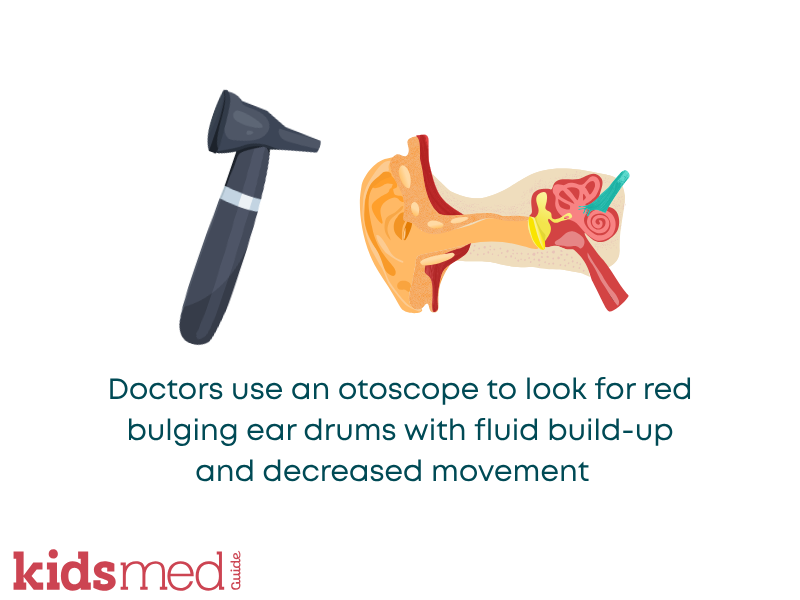
Healthcare providers diagnose ear infections in babies and toddlers by examining the ears with an instrument called an otoscope.
They look for:
- Bulging of the eardrum
- Redness
- Fluid behind the eardrum
- Decreased movement of the eardrum
This is important because not every fussy child with a cold has an ear infection. In some cases, fluid may remain behind the ear after a viral illness, even if the ear was not actually infected.
Do Ear Infections Always Need Antibiotics?
One of the biggest surprises for many parents is that not all ear infections need antibiotics.
Some infections are caused by viruses, which antibiotics cannot treat. Even some bacterial ear infections improve on their own with the help of the body’s immune system.
Because of this, pediatric guidelines often recommend a “watchful waiting” approach for mild infections in certain age groups.
This means:
- Monitoring symptoms closely
- Treating pain and fever
- Watching for improvement over 48 to 72 hours
I know this can feel frustrating as a parent. Your child is uncomfortable, no one is sleeping, and life does not pause for ear infections. However, avoiding unnecessary antibiotics is important because overuse can contribute to antibiotic resistance and side effects.
Related:
Amoxicillin and Augmentin guides for use in kids!
How Ear Infection Symptoms Are Treated at Home
Supportive care may include:
- Rest
- Fluids
- Snuggles and cartoons (strongly evidence-based in my household)
- Fever reducers like acetaminophen or ibuprofen, when appropriate
Related
Acetaminophen dosing for children
Ibuprofen dosing for kids
What to do if your child spits out antibiotics
Safe fever reducers for children
When to Call the Doctor for an Ear Infection
While some mild ear infections in toddlers improve on their own, there are times when your child should be evaluated by a healthcare professional.
Use these guidelines as a general rule of thumb:
Call your pediatrician if:
- Your child is younger than 6 months old
- Symptoms last more than 2 to 3 days
- Your child has severe ear pain
- Your child becomes extremely fussy or inconsolable
- You notice fluid, pus, or bloody drainage from the ear
- Your child develops a fever of 102°F or higher
- Your child has trouble hearing or balance problems
- Symptoms seem to worsen instead of improve
If your child appears very lethargic, has difficulty breathing, or you are worried that something is seriously wrong, seek medical care immediately.
How to Help Prevent Ear Infections in Children
Unfortunately, there is no guaranteed way to prevent ear infections in children. Some kids are simply more prone to them than others.
However, there are some ways to help reduce the risk:
- Stay current with routine childhood vaccines
- Get the yearly flu shot
- Practice good hand hygiene
- Avoid secondhand smoke exposure
- Breastfeed if possible
- Hold babies upright during bottle feeding
Unfortunately, group childcare settings like daycare increase exposure to viruses and bacteria that commonly trigger ear infections in babies and toddlers. This is extremely common and not something parents should feel guilty about.
If your child develops frequent or chronic infections, your pediatrician may recommend evaluation by an ENT specialist. Some children benefit from ear tubes to improve drainage and reduce the risk of recurrence.
Final Thoughts
Ear infections in babies and toddlers are among the most common childhood illnesses parents encounter. Learning the common signs, understanding when antibiotics are needed, and knowing how to manage pain and make your child more comfortable are helpful for all caregivers!
The good news is that most children recover completely and eventually outgrow the stage of constant runny noses and repeated ear infections.
Until then, coffee helps.
Frequently Asked Questions
Can teething cause ear pulling?
Yes. Babies often pull at their ears while teething because pain can radiate to nearby areas. Ear pulling alone does not necessarily mean your child has an ear infection.
Can an ear infection go away without antibiotics?
Yes. Many mild ear infections improve on their own without antibiotics, especially in older babies and toddlers. Your pediatrician may recommend a watchful waiting approach for 48 to 72 hours.
How long do ear infections last in children?
Many children begin feeling better within 2 to 3 days, although fluid behind the ear can sometimes linger for several weeks after the infection improves.
Are ear infections contagious?
The ear infection itself is not contagious, but the viruses and bacteria that lead to ear infections can spread between children.
At what age are ear infections most common?
Ear infections are most common between 6 months and 3 years of age because young children have smaller and less efficient Eustachian tubes.