Flu Shot for Kids: Benefits, Side Effects, and What Parents Should Know

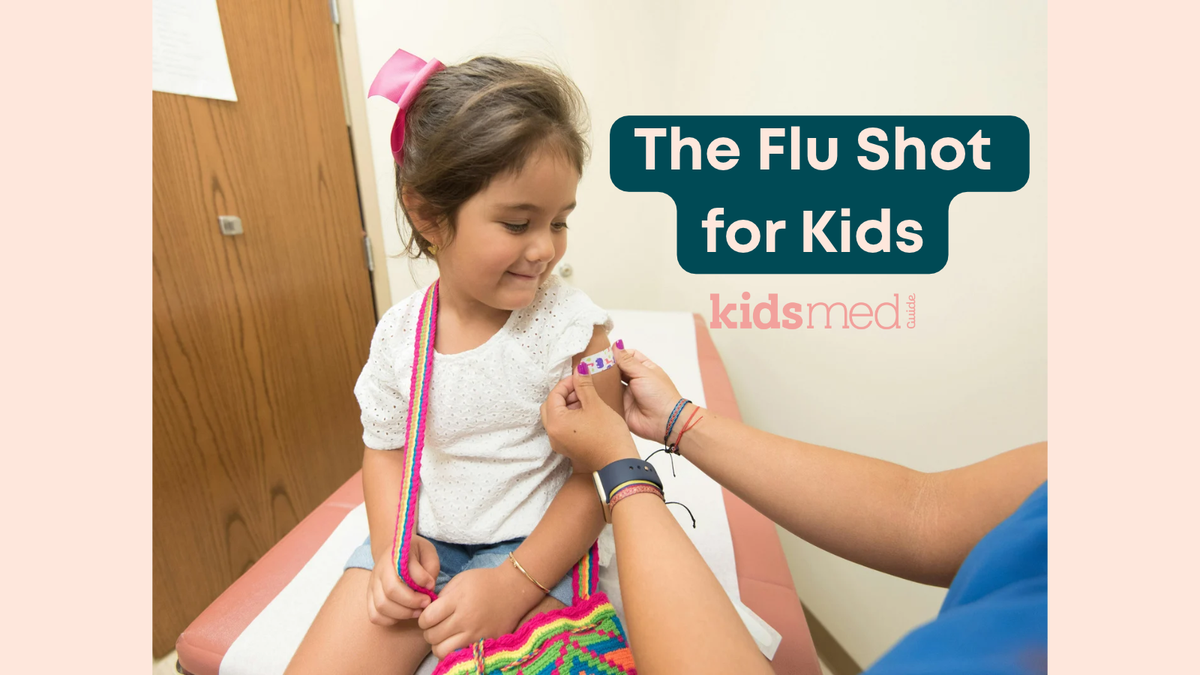
Getting a flu shot is an annual tradition in my home. The kids grumble and whine, but they know they have to go. They also know that they'll get a donut afterward as compensation for their trials and tribulations.
I don't necessarily encourage bribery in kids, but I really like donuts myself, so I'm willing to make this compromise—for health.
The American Academy of Pediatrics (AAP) recommends an annual flu vaccine for all children ages 6 months and older, unless they have a medical contraindication. Flu vaccination helps protect children against influenza and reduces the risk of serious complications, including hospitalization.
Here's what parents should know about the flu vaccine for the 2026–2027 season, including who should get vaccinated, which vaccine to choose, and what side effects to expect.
Who Should Get Vaccinated?
Almost everyone!
The AAP recommends annual influenza vaccination for children ages 6 months and older, including babies, toddlers, school-aged children, and teenagers.
Although healthy children can develop serious complications from influenza, some children are at particularly high risk, including:
- Children younger than 5 years, especially those younger than 2 years
- Children with asthma or other chronic lung conditions
- Children with certain heart, neurologic, or metabolic conditions
- Children with weakened immune systems
- Children with other medical conditions that increase their risk of complications
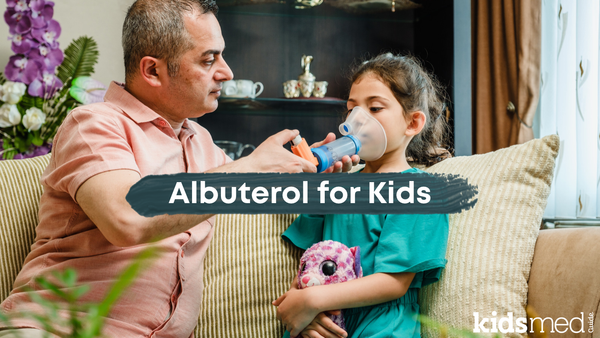
Children with asthma should receive an annual flu vaccine because respiratory infections can trigger asthma symptoms and exacerbations. Learn more in our guide to childhood asthma treatment and daily management.
Flu vaccination is also recommended during pregnancy. Vaccination helps protect the pregnant individual and provides some protection to their baby during the first months of life, before the infant is old enough to receive a flu vaccine.
Parents should speak with their physician if they have questions or concerns about getting the flu shot while pregnant.
Who Should Not Get the Flu Vaccine?
Most children can safely receive a flu vaccine. However, a few situations require special consideration.
Children who have experienced a severe allergic reaction, such as anaphylaxis, after a previous flu vaccine should be evaluated before receiving another dose. Their healthcare provider or allergist can help determine whether a different vaccine formulation may be appropriate.
A history of Guillain-Barré syndrome within six weeks of a previous influenza vaccination also requires an individualized discussion.
Children who are moderately or severely ill may be advised to wait until they recover. However, a mild cold is generally not a reason to postpone vaccination. (Let's face it, kids pretty much always have a mild cold October-April).
What about egg allergies? Children with egg allergies can receive an age-appropriate influenza vaccine, including egg-based versions. Consult your doctor for guidance.
Flu Shot vs. Nasal Spray: Which Is Better?
There are two main ways children can receive the influenza vaccine:
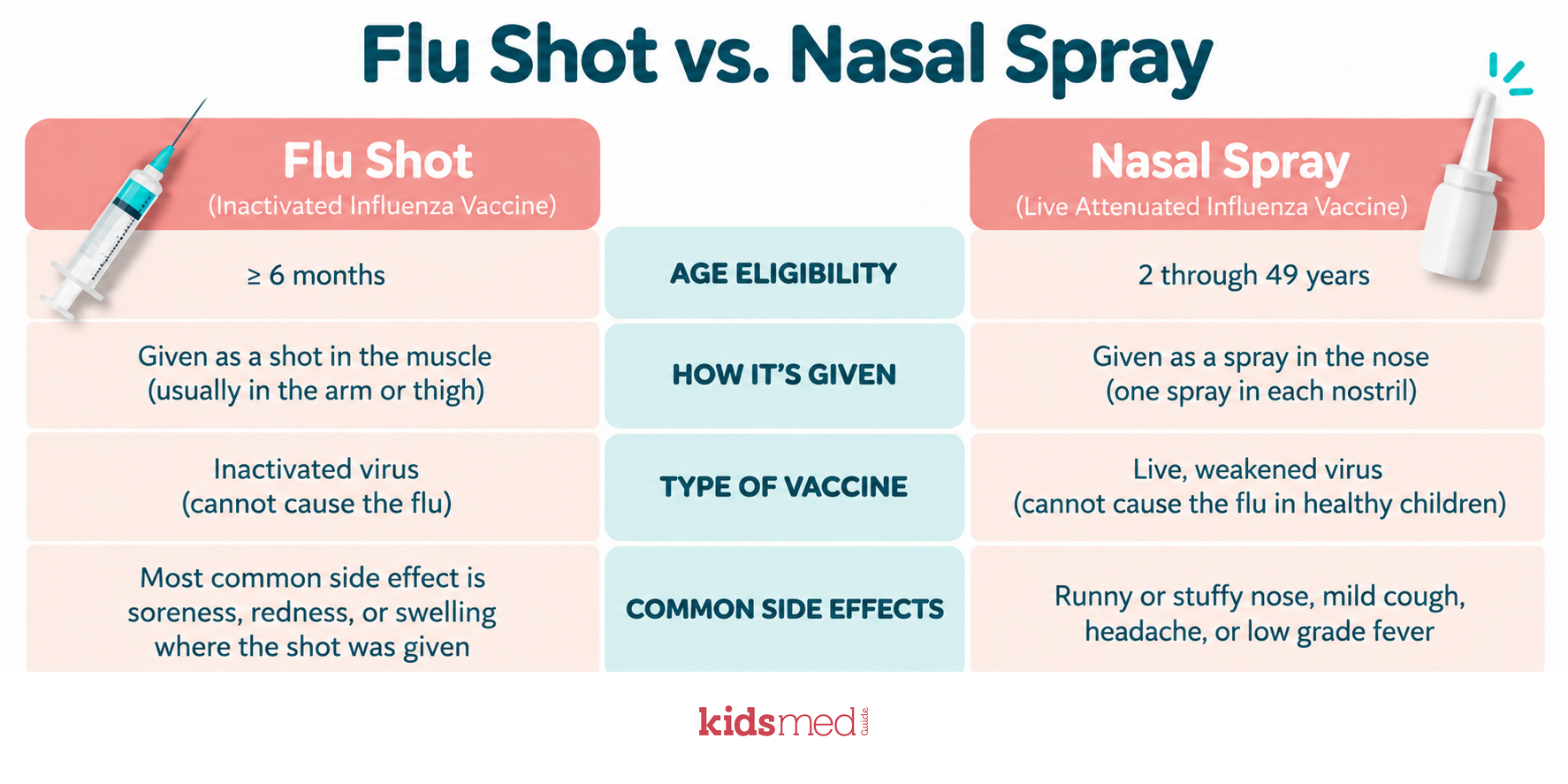
- Flu shot: An injectable vaccine that does not contain live influenza virus. Several formulations are available for children starting at 6 months of age.
- Nasal spray: A live attenuated influenza vaccine, commonly known as FluMist, that is approved for eligible people ages 2 through 49 years.
The AAP does not recommend one influenza vaccine over another for children who are eligible for both. The best choice depends on your child's age, medical history, and vaccine availability.
However, the nasal spray is not appropriate for everyone. For example, children ages 2 through 4 with asthma or a history of wheezing in the past 12 months should not receive it. For children ages 5 years and older, asthma is a precaution to discuss with their healthcare provider.
The nasal spray also has restrictions for children with certain immune conditions and those taking specific medications.
What's Different About the 2026–2027 Flu Vaccine?
Influenza viruses change over time, so flu vaccine formulations are reviewed and updated to improve protection against viruses expected to circulate during the upcoming season.
For the 2026–2027 season, influenza vaccines contain three influenza virus components, commonly called a trivalent vaccine.
The flu vaccine cannot guarantee that your child will avoid influenza altogether. However, vaccination can reduce the likelihood of illness and serious complications.
And remember: the injectable flu vaccine cannot give your child influenza because it does not contain live influenza virus.
Benefits of Flu Vaccination
Getting your child vaccinated offers several important benefits:
- Reduces the risk of influenza. Vaccinated children are less likely to develop influenza illness.
- Helps reduce serious complications. Vaccination can reduce the risk of influenza-related hospitalization and severe outcomes.
- Protects family members. Vaccinating children reduces the risk of influenza transmission, especially to young infants and other high-risk people, such as elderly grandparents.
- Helps keep children in school and activities. Preventing illness means fewer missed school days, practices, and family parties. It also means fewer days off work!
- Provides protection throughout flu season. Annual vaccination helps prepare children for the influenza viruses circulating each season.
Even vaccinated children can occasionally get influenza. If your child develops symptoms, our flu versus common cold checklist can help you understand what to look for.
When Should Kids Get Their Flu Shot?
September and October are ideal months for most children to receive their flu vaccine. Children who need two doses should start as soon as the vaccine becomes available so they can complete the series, ideally by the end of October.
There's a saying: “Flu before Boo!” (Get your shot before Halloween.)
However, it's still worth getting vaccinated later in the season if your family hasn't had the opportunity yet. Influenza often continues circulating well into winter and early spring.
If your child has an autumn well-child appointment, get the shot if it's offered. It's hard to remember to come back!
I like to get flu shots for our family well before the holidays. Between school activities, family gatherings, and the general chaos of December, there's already enough to juggle.
Does My Child Need One Flu Shot or Two?
For the 2026–2027 season:
- Children younger than 6 months: Influenza vaccines are not approved for this age group.
- Children ages 6 months through 8 years: Children who have not previously received at least two influenza vaccine doses before July 1, 2026, or whose vaccination history is unknown, generally need two doses this season.
- If your child is 8 years old when they receive their first dose and turns 9 before their second dose, they should still complete the two-dose series.
- Children who need two doses: The doses should be separated by at least four weeks.
- Children ages 9 years and older: One dose is recommended each season, regardless of previous vaccination history.
Children ages 6 months through 8 years who have already received at least two previous doses generally need only one dose this season.
Your pediatrician or pharmacist can review your child's vaccination record and confirm the appropriate schedule.
Flu Shot Side Effects in Kids
Most side effects from influenza vaccination are mild and resolve within a few days.
Common side effects of the injectable vaccine include:
- Soreness, redness, or swelling where the shot was given
- Mild fever
- Headache
- Muscle aches
- Fatigue
The nasal spray may cause a runny nose, nasal congestion, or other mild respiratory symptoms.
Can I give my child Tylenol or Motrin after a flu shot?
If your child develops bothersome discomfort or fever after vaccination, acetaminophen (Tylenol) or ibuprofen (Motrin or Advil) may help when appropriate for their age and medical history. Mild symptoms often resolve without medication.
Use the correct weight-based dose and follow your pediatrician's guidance. Ibuprofen is generally not recommended for infants younger than 6 months unless directed by their healthcare provider.
Routine administration of fever-reducing medication before vaccination solely to prevent side effects is generally not recommended.
For more medication safety information, see our guides to acetaminophen use in children and ibuprofen use in kids.
Related: Acetaminophen vs. Ibuprofen: Which Should You Choose?
Related: Can You Give Acetaminophen and Ibuprofen at the Same Time?
Frequently Asked Questions
Can my child get a flu shot if they have a cold?
Usually, yes! A mild cold, with or without a low fever, generally does not prevent vaccination.
Children who are moderately or severely ill may need to wait until they feel better. Your pediatrician can help determine the best timing.
Can my child get the flu vaccine if they have an egg allergy?
Yes. Children with egg allergies can receive an age-appropriate influenza vaccine without additional precautions beyond standard vaccination procedures.
Can children with asthma get the nasal spray flu vaccine?
It depends on their age and medical history.
Children ages 2 through 4 years with asthma or recent wheezing should not receive the nasal spray. For children ages 5 years and older with asthma, the nasal spray requires additional consideration.
An injectable flu vaccine is an appropriate option for children with asthma.
What if my child gets the flu even after vaccination?
Breakthrough influenza infections can occur because vaccine effectiveness varies from season to season.
Children who develop influenza may benefit from antiviral treatment, especially if they are at higher risk for complications or have severe symptoms.
Read our guide to treating flu in kids for more information about medications, including Tamiflu.
Conclusion
Getting the flu is rough at best and dangerous at worst. It disrupts school, work, and home life.
We've had it in our house a few times over the years, and while it was miserable, I'm grateful that vaccination offers an important layer of protection for my kids and our family.
The peace of mind that comes with knowing you've taken steps to protect your child is invaluable.
If I could get two flu shots, I would! But apparently, that's not how this works.
Stay well!
Read Next:
 KidsMedMom Andrea M., PharmD, BCPPS
 KidsMedMom Andrea M., PharmD, BCPPS

References:
American Academy of Pediatrics. (2026, August 10). AAP (influenza) flu prevention & treatment recommendations for 2026–27. HealthyChildren.org. https://www.healthychildren.org/English/news/Pages/aap-%28influenza%29-flu-prevention-recommendations-for-2026-27.aspx
American Academy of Pediatrics. (2026). Preparing for the 2026–27 influenza season. https://www.aap.org/en/patient-care/influenza/preparing-for-flu-season
Committee on Infectious Diseases. (2026). Recommendations for prevention and control of influenza in children, 2026–2027: Policy statement. Pediatrics. https://doi.org/10.1542/peds.2026-078778
Committee on Infectious Diseases. (2026). Recommendations for prevention and control of influenza in children, 2026–2027: Technical report. Pediatrics. https://doi.org/10.1542/peds.2026-078779
Children's Hospital of Philadelphia, Vaccine Education Center. (n.d.). Influenza: The disease and vaccines. https://www.chop.edu/vaccine-education-center/vaccine-details/influenza-vaccine