Albuterol for Kids: Side Effects, Inhalers, Nebulizers, and Safety Tips

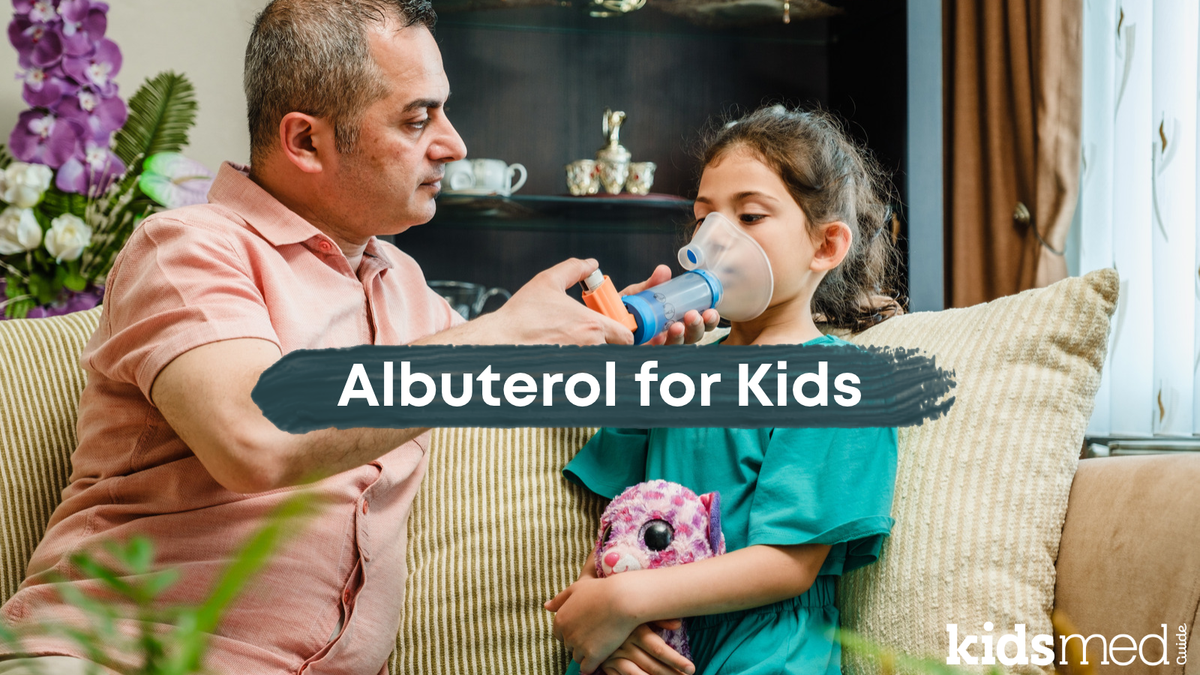
Albuterol is a common medication used in children and adults alike. Many kids will need albuterol at some point in their lives, whether for asthma or to help manage wheezing during an illness.
For example, it is prescribed for:
- Asthma
- Wheezing
- Reactive airway disease
- Wheezing or bronchospasm triggered by certain viral illnesses
- Exercise-induced breathing symptoms
Even though it's a common medication, many parents still have questions:
- Why does this medication make my child shaky?
- Is the nebulizer stronger than the inhaler?
- How often is too often?
- Why does my child suddenly act like they drank three iced coffees?
If your child has been prescribed albuterol, here is what parents should know about how this medication works, common side effects, and when to seek medical attention.
What Is Albuterol?
Albuterol is a rescue medication that helps open the airways in the lungs. It belongs to a class of medications called bronchodilators.
When children wheeze, cough, or have shortness of breath from asthma or certain illnesses, the muscles around the airways can tighten.
Albuterol relaxes the airway muscles, allowing the airways to widen so air can move more freely and making breathing easier.
What Is Albuterol Used For In Kids?
Common reasons children may receive albuterol include:
- Asthma
- Wheezing
- Exercise-induced bronchospasm
- Wheezing associated with certain respiratory infections
- Reactive airway symptoms
Some children use it only occasionally, while others may need it more regularly during illness or allergy seasons.
Albuterol is most often used as a "rescue" inhaler, providing quick relief when a child has active wheezing or shortness of breath caused by airway tightening. This differs from long-term maintenance, or controller, medications that help keep asthma under control.
Some kids may use albuterol before a known trigger for wheezing, such as being outside in the cold or before playing sports or participating in gym class.
Albuterol Inhaler vs. Nebulizer: Which Is Better?
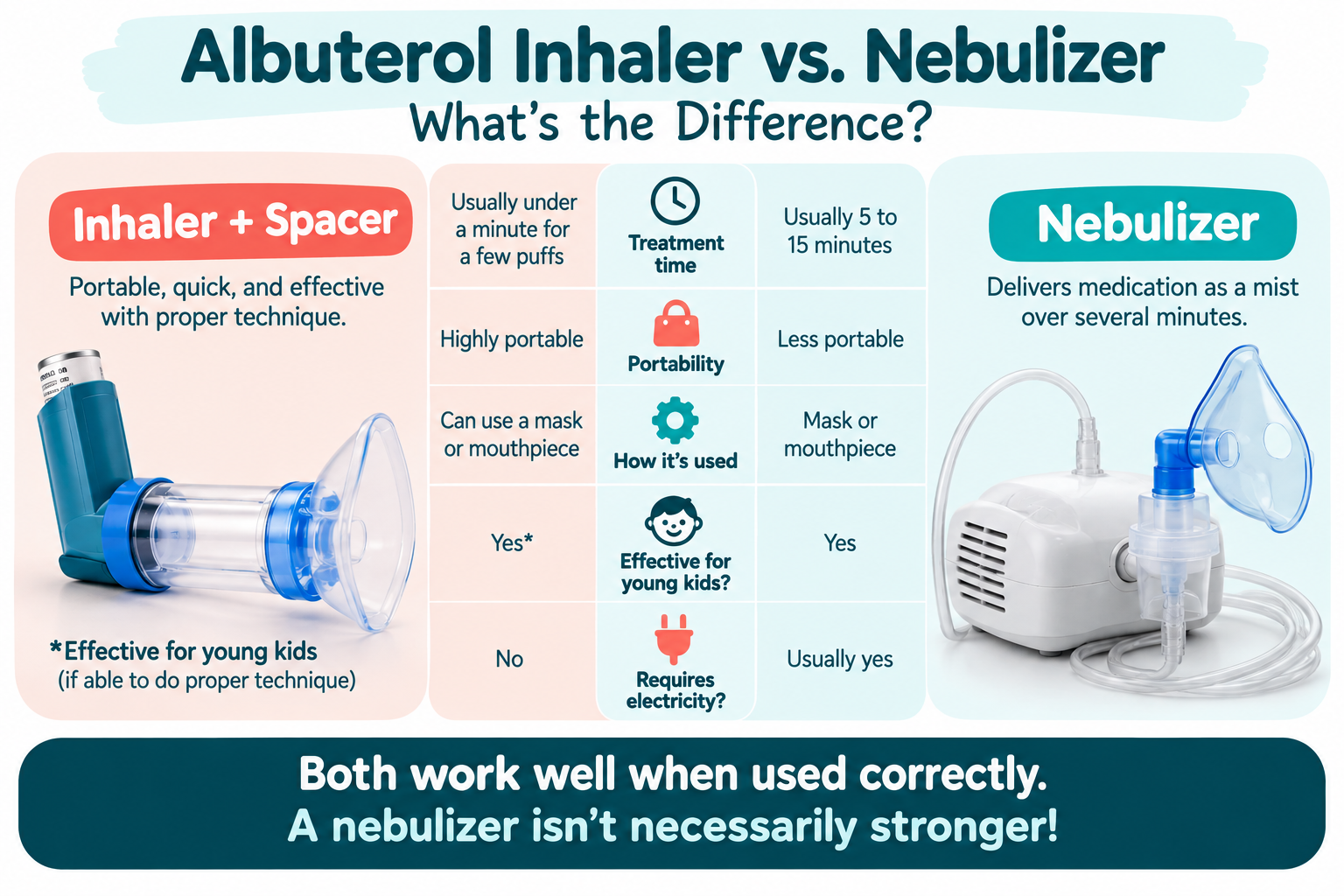
Not necessarily one or the other! Both inhalers and nebulizers are effective, and each has its own advantages and disadvantages. Used correctly, both work well. Albuterol is available as an inhaler or nebulizer.
Inhalers
With a metered-dose inhaler, the child inhales medication through a mouthpiece into the lungs.
Inhalers are portable and fast. Older children will appreciate the convenience of keeping their albuterol inhaler handy at school, playdates, games, and practices, as allowed by school medication policies.
The disadvantage? Using an inhaler without a spacer requires coordination. Children must be developmentally old enough to coordinate the "puff" of medication with a slow, deep inhale and hold their breath afterward.
Fortunately, a spacer can make this much easier!
Inhalers with spacers
A spacer attaches to the end of an inhaler and is often recommended with albuterol metered-dose inhalers.
A spacer is a chamber that holds the medication briefly after a puff, giving the child more time to inhale it. This can help the medication reach the lungs more effectively.
Younger children can use a spacer with a properly fitted mask and breathe normally, while older children may use a mouthpiece with slow, deep breaths.
Inhaler and spacer tips parents should know
Using an inhaler and spacer correctly matters! Always follow the instructions in the inhaler's medication guide.
Helpful tips include:
- Shake an albuterol metered-dose inhaler before use, as directed.
- Prime albuterol metered dose inhalers before the first use and after a period of nonuse, according to the specific product instructions.
- Use the proper mask size if applicable.
- Encourage slow, deep breaths when using a mouthpiece, or normal breathing when using a spacer with a mask.
- Clean spacers regularly according to the manufacturer's instructions.
Nebulizers
Nebulizers turn medication into a mist inhaled over several minutes.
The medication (like albuterol) comes as a liquid and is placed into a small cup. The nebulizer turns the liquid into a mist that flows through the device and into a facemask or mouthpiece, so the child can breathe it in.
Nebulizers are a great choice when an inhaler isn't possible or practical. No breath coordination or breath holding is required; the child breathes normally through the mask or mouthpiece.
Situations where a nebulizer may be helpful include:
- Infants
- Younger children
- Children having more severe symptoms who are unable to use an inhaler effectively
- Children unable to use inhalers properly
However, many infants and younger children can also use an inhaler effectively with a spacer and mask.
A nebulizer is not necessarily "stronger." The effectiveness often depends more on proper technique and cooperation.
Disadvantages? A nebulizer is less portable, has several parts, often requires an electrical outlet, and takes longer to administer a dose than an inhaler.
Follow the nebulizer's instruction guide to clean and replace parts.
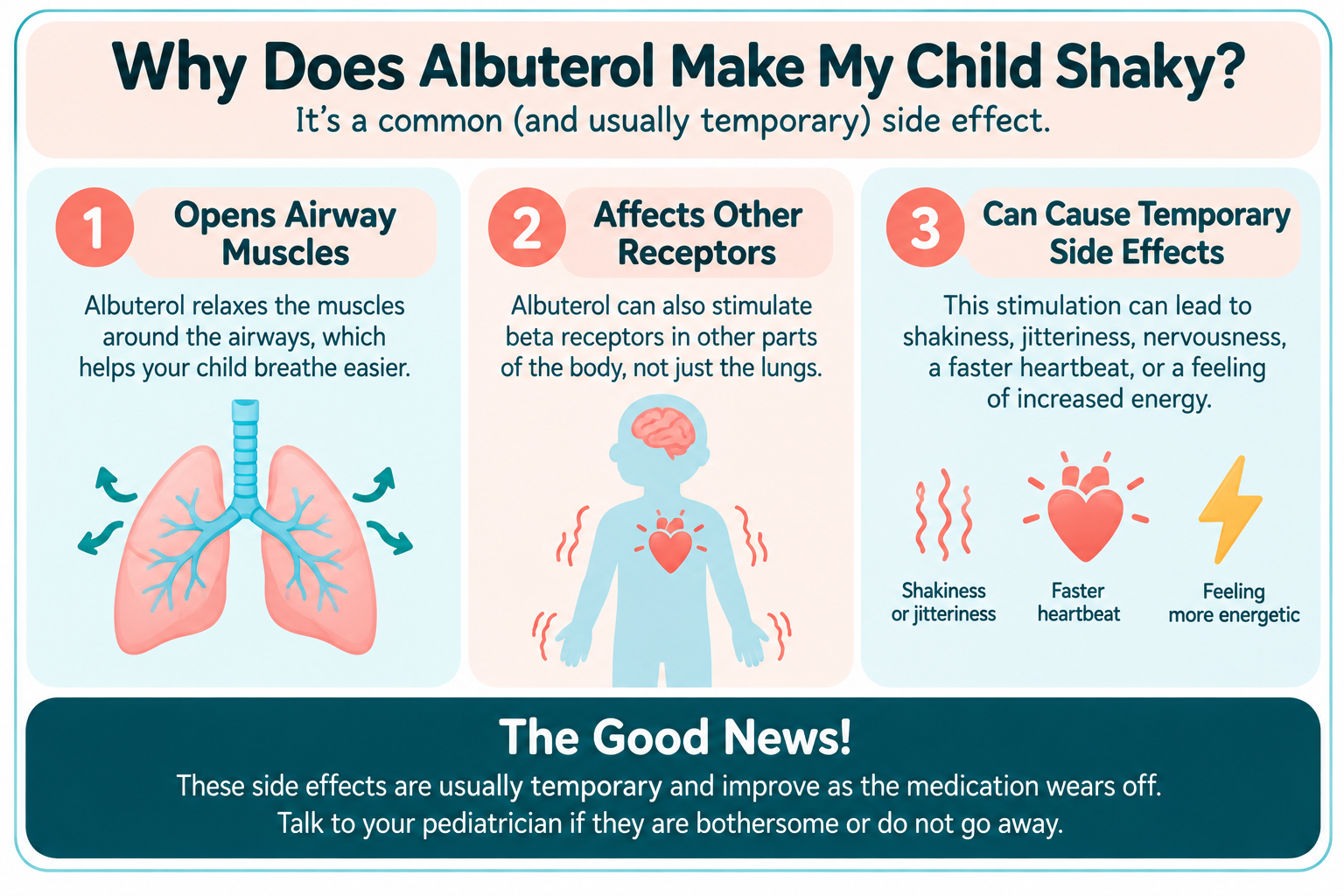
Why Does Albuterol Make Kids Shaky?
This is one of the most common side effects parents notice, and one that (understandably) worries parents!
Albuterol can temporarily cause:
- Shakiness
- Jitteriness
- Nervousness
- A feeling of increased energy or restlessness
- Faster heart rate
This happens because albuterol stimulates special receptors not only in the lungs (where we want it to work), but also elsewhere in the body.
These side effects are usually temporary and improve as the medication wears off.
Some children barely notice them. Others suddenly seem ready to build a tower of Legos or stay awake until midnight.
Sometimes, a pediatrician may administer albuterol in the office to evaluate a child's breathing and response to treatment.
If your child experiences bothersome shakiness or a racing heart after albuterol, talk to your pediatrician or pharmacist. They can review the prescribed dose, inhaler technique, and whether any adjustments are appropriate.
Can Albuterol Increase Heart Rate?
Yes.
A mild increase in heart rate is a known and common effect of albuterol.
While a mild increase in heart rate is usually temporary and not alarming, parents should contact their healthcare provider if they notice concerning symptoms. Seek emergency medical care for severe symptoms, including:
- Severe palpitations
- Chest pain
- A persistent or unusually rapid heart rate, especially if accompanied by other symptoms
- Worsening breathing difficulty
How Often Can Kids Use Albuterol?
This depends on your child's asthma plan, medical condition, age, and prescribed medication.
For example, some albuterol inhalers are prescribed as 1 to 2 puffs every 4 to 6 hours as needed. However, the appropriate dose and frequency depend on your child's prescription and asthma action plan.
Some kids have an asthma action plan that directs them to use additional doses during an asthma flare or before a known trigger.
If your child needs albuterol more often than every 4 hours, contact their healthcare provider unless their asthma action plan specifically directs otherwise. If symptoms are severe or worsening despite treatment, seek emergency care.
If parents notice an increased or frequent need for albuterol, it may suggest asthma or respiratory symptoms aren't well controlled. Report this to your pediatrician and follow your asthma action plan.
As a general rule, needing albuterol for asthma symptoms more than twice a week, excluding use before exercise, may suggest that asthma is not adequately controlled.
Possible signs of poor control
Parents should talk with their pediatrician if:
- Albuterol is needed frequently
- Nighttime coughing occurs regularly
- Symptoms interfere with sports or sleep
- Symptoms worsen despite treatment
Can Kids Use Albuterol Before Exercise?
Some children develop coughing, wheezing, or chest tightness during physical activity. Cold air may make it worse.
This is often called:
- Exercise-induced bronchospasm
- Exercise-induced asthma
The more precise medical term is exercise-induced bronchoconstriction.
Children may use albuterol before:
- Sports
- Gym class
- Running
- Outdoor activities
Albuterol is commonly prescribed approximately 15 to 30 minutes before exercise to help prevent exercise-induced breathing symptoms.
Always follow your pediatrician's guidance and your child's asthma action plan.
Does Albuterol Help Cough?
Sometimes. It depends on the cause.
Albuterol might be prescribed if a cough is related to airway tightening or wheezing.
It does not typically help:
- Routine colds
- Postnasal drip
- Sore throat-related cough
- Most uncomplicated viral coughs or upper respiratory infections
Albuterol is also not routinely recommended for bronchiolitis, a common viral lower respiratory infection in infants and young children.
If your child is coughing with increased work of breathing, seek prompt medical care. A cough accompanied by fever may also warrant evaluation, depending on the child's age, symptoms, and overall condition.
Can Kids Use Expired Albuterol?
Parents should check expiration dates regularly and make a special effort before illness or allergy season starts, or before your kid heads off to camp.
Expired inhalers may:
- Lose effectiveness
- No longer provide the expected dose or effectiveness
This is especially important for rescue medications like albuterol.
Another important tip? Check the inhaler's dose counter! An inhaler can be empty even if it still seems to spray.
Store albuterol correctly, away from high heat or direct sunlight, and follow the storage instructions for your specific product. If in doubt, replace the inhaler.
When Should Parents Seek Medical Attention?
Parents should seek emergency medical care (911) if a child develops:
- Severe breathing difficulty
- Lips turning blue
- Inability to speak comfortably
- Retractions or struggling to breathe
- Worsening symptoms despite albuterol
Rescue inhalers are important, but they are not a substitute for emergency evaluation if symptoms become severe.
Final Thoughts
Albuterol is a commonly prescribed medication for kids, and it helps to alleviate or prevent wheezing and trouble breathing from conditions like asthma.
Key takeaways:
- Shakiness can be normal.
- Inhalers with spacers work very well.
- Frequent need for albuterol may suggest poor symptom control.
- Proper technique matters. Follow medication guides and ask your doctor's office for demonstrations or help.
Most importantly, parents should never feel embarrassed asking questions about inhalers or nebulizers!
Frequently Asked Questions
Why does albuterol make my child hyper?
Albuterol may temporarily cause shakiness, jitteriness, nervousness, or a feeling of increased energy because it stimulates beta receptors throughout the body.
Is a nebulizer stronger than an inhaler?
Not necessarily. Inhalers used with spacers can work extremely well when used correctly. Nebulizers are not inherently stronger, and the best option depends on your child's needs and ability to use the device.
How often can children use albuterol?
This depends on the child's asthma plan, prescribed dose, age, and medical condition. Some inhalers are prescribed every 4 to 6 hours as needed, but frequent use may suggest symptoms are not well controlled.
Can albuterol help regular coughs?
Usually only if the cough is associated with wheezing or airway constriction. Albuterol generally does not help routine coughs from uncomplicated colds.
Should children use a spacer with albuterol inhalers?
Yes. Spacers are recommended with albuterol metered dose inhalers, particularly for children. They help medication reach the lungs more effectively and reduce the need to coordinate a puff with inhalation.
When should I seek emergency care for breathing problems?
Parents should seek emergency medical care (911) for severe breathing difficulty, blue lips, worsening symptoms, or a poor response to rescue medication.
References
National Heart, Lung, and Blood Institute. (2020). 2020 Focused Updates to the Asthma Management Guidelines: Clinician's Guide. https://www.nhlbi.nih.gov/resources/clinician-guide-2020-focused-updates-asthma-management-guidelines
American Lung Association. ABCs of Using a Nebulizer. https://www.lung.org/getmedia/3124fe1d-abc5-4741-8c17-bc8a449ea67b/abcs-nebulizer-v2-4-6-2020_new-branding.pdf
Centers for Disease Control and Prevention. (2026). About Asthma. https://www.cdc.gov/asthma/about/index.html
DailyMed. Albuterol Sulfate Aerosol, Metered. National Library of Medicine. https://dailymed.nlm.nih.gov/dailymed/drugInfo.cfm?setid=f8a2c4b7-a162-48ab-90b0-350e4da25c66
DailyMed. Albuterol Sulfate Inhalation Solution, 0.5%. National Library of Medicine. https://dailymed.nlm.nih.gov/dailymed/drugInfo.cfm?setid=fdb4ac5a-bf0d-4896-89f7-1828c081b79e
Nationwide Children's Hospital. How to Use an Inhaler with a Spacer and Mouthpiece. https://www.nationwidechildrens.org/family-resources-education/health-wellness-and-safety-resources/resources-for-parents-and-kids/how-to-use-an-epipen/epinephrine-myths-and-facts/how-to-use-an-inhaler-with-a-spacer-and-mouthpiece
American Academy of Pediatrics. (2025). Medications to Treat Asthma in Children. HealthyChildren.org. https://www.healthychildren.org/English/health-issues/conditions/allergies-asthma/Pages/Medications-Used-to-Treat-Asthma.aspx
American Academy of Pediatrics. Asthma Devices for Kids: How to Use Inhalers and Nebulizers Effectively. HealthyChildren.org. https://www.healthychildren.org/English/health-issues/conditions/allergies-asthma/Pages/asthma-devices-for-kids-how-to-use-inhalers-and-nebulizers-effectively.aspx
Ralston SL, Lieberthal AS, Meissner HC, et al. (2014). Clinical practice guideline: The diagnosis, management, and prevention of bronchiolitis. Pediatrics, 134(5), e1474–e1502. https://doi.org/10.1542/peds.2014-2742