Strep Throat in Kids: Antibiotics, Symptoms, and What Parents Should Know

If you asked any of my mom friends what the most frustrating common kid illness is, I'd be willing to bet the mortgage that most would say strep throat (with the stomach bug being a very close second).
Unfortunately, frequent strep throat infections are a rite of passage for many school-age kids, and their families often pay the collateral damage price.
I groan every time one of my kids gets it, mainly because they feel crummy but also because I know at least one other family member will catch it, and we'll have several days of missed school and work.
The best part of having kids is that someone's always on hand to get me sick, am I right?
Quick answer for busy parents: Most children with strep throat start feeling better within 24 to 48 hours of starting antibiotics. Kids are usually much less contagious after about 24 hours of antibiotics and once fever-free.
What Is Strep Throat?
Strep throat is a common bacterial infection that primarily affects children ages 5 to 15 years and sometimes the moms they slobber on (kidding).
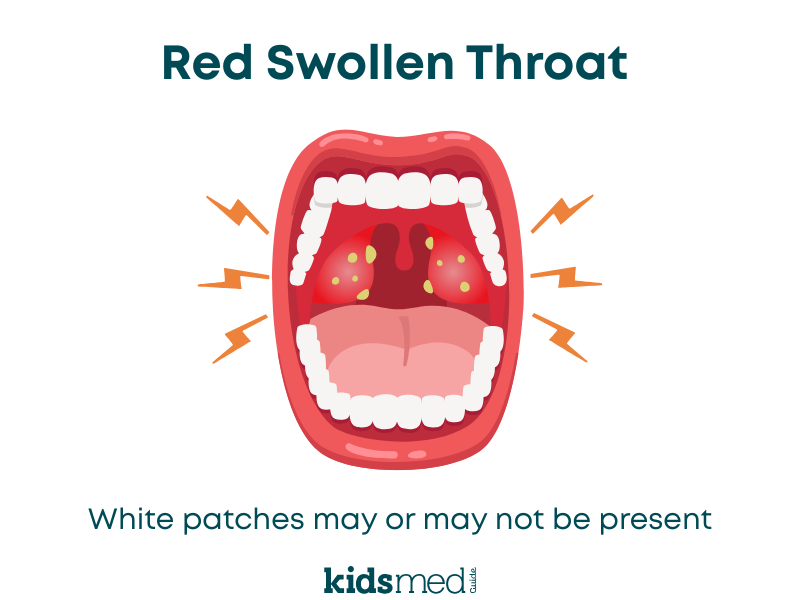
It is caused by Group A Streptococcus bacteria (GAS), also known as Streptococcus pyogenes. It typically presents as acute pharyngotonsillitis, which is basically a fancy medical term for “crazy painful red swollen throat” caused by inflammation of the throat and tonsils.
However, strep throat can sometimes be sneaky and may cause other symptoms such as a rash, stomach aches, vomiting, or headache.
The most common time for strep throat to circulate is late winter through early spring, but it can occur at any time of year.
The infection is highly contagious and spreads easily through respiratory droplets or direct contact with infected individuals. Sharing drinks, chapstick, water bottles, utensils, and kisses are all common ways that strep can spread.
Elementary schools are basically breeding grounds for the infection because younger kids do not exactly respect personal space. The incubation period for strep throat is usually about 2 to 5 days, so it can slowly move through an entire household over a few weeks. Fun!
How Do I Know if It Is Strep Throat or a Virus?
Many viruses can cause a red, swollen throat, making it difficult to distinguish between strep throat and a viral illness. Last summer, I dragged all three of my kids to the pediatrician’s office because I was convinced they had strep throat, but they did not. It turned out to be a virus causing red spots in the throat.
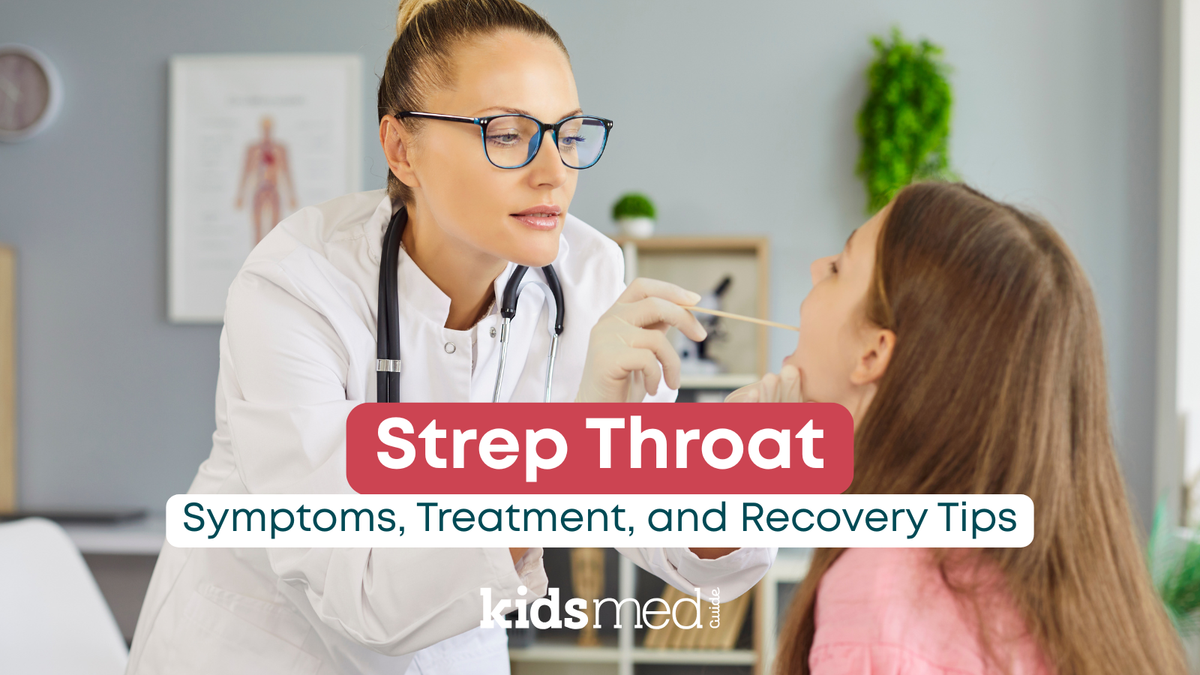
Strep throat can be diagnosed only by a medical provider, such as a pediatrician, physician assistant, or nurse practitioner. The provider will evaluate your child’s symptoms, examine the throat, and determine whether testing is appropriate.
If strep throat is suspected, the provider will swab the tonsils with a long Q-tip-style swab and perform a rapid strep test, and sometimes a throat culture.
Common Symptoms of Strep Throat in Children
Here are some common strep throat symptoms that should put your parent radar on high alert:
- Sudden onset of sore throat
- Fever greater than 100.4°F
- Pain with swallowing that can be sharp and intense
- Dark red spots or white patches around the tonsils
- Swollen and tender lymph nodes in the neck
- Headache
- Abdominal pain
- Nausea or vomiting
- Fine red sandpaper-like rash on the body, especially the trunk or torso (scarlet fever)
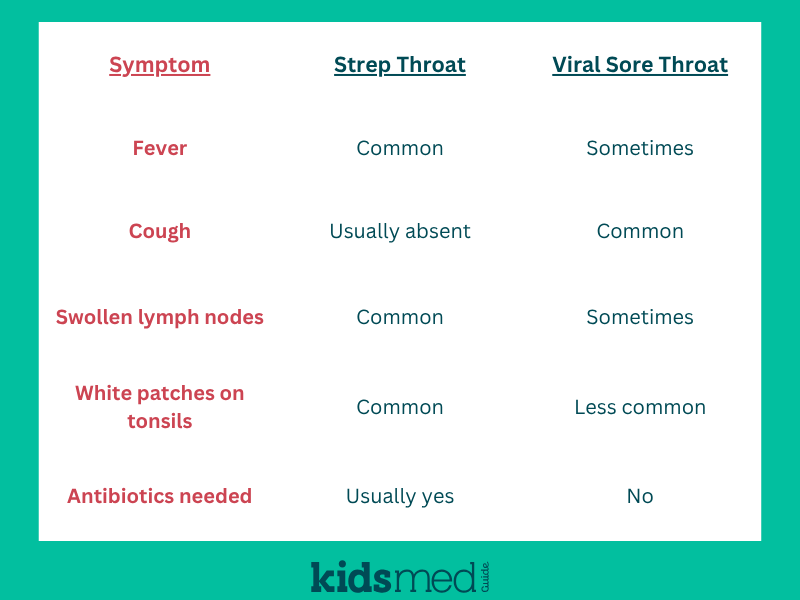
- Lack of cough, congestion, or sneezing, which are more common with viral illnesses
Strep Throat vs Viral Sore Throat
Your child’s pediatrician should always evaluate severe symptoms. Seek prompt medical care if your child has:
- Trouble breathing
- Cannot drink fluids
- Is drooling
- Has severe neck pain or swelling
- Cannot move the neck normally
- Appears lethargic or significantly worse
- Has anything concerning or unusual to you as a parent
How Is Strep Throat Treated?
Strep throat is a bacterial infection treated with antibiotics. Treatment aims to:
- Reduce throat pain and other symptoms
- Clear the infection
- Reduce contagiousness
- Prevent complications
If your child’s strep test is negative, most providers will assume the sore throat is caused by a virus that will not improve with antibiotics. In these situations, parents are usually advised to monitor symptoms and follow up if the child's condition worsens or does not improve over several days.
The first choice treatment for strep throat is usually penicillin or amoxicillin. In children, amoxicillin is commonly used because it tastes better and is easier to dose.
If your child is allergic to amoxicillin or penicillin, there are several alternative antibiotics available.
Why Finishing the Full Antibiotic Course Matters
Most antibiotic courses for strep throat last about 10 days, although some alternative regimens may be shorter. Even if your child feels much better after a day or two, it is still important to finish the full course exactly as prescribed.
For the pharmacy nerds in the group 🤓, amoxicillin is what we call a “time-dependent killer,” meaning the medication needs adequate exposure time to fully eliminate the bacteria. Hence, the very long 10-day treatment course.
Stopping antibiotics early can increase the risk of recurrent infection and may reduce the effectiveness of treatment.
When Will My Child Feel Better?
Most kids begin feeling better after 2 or 3 doses of antibiotics.
Until the infection improves, parents can use acetaminophen or ibuprofen for fever and pain relief if appropriate for their child. Warm saltwater gargles for older children, along with cold drinks, smoothies, and popsicles, can also be very soothing!
My kids would tell you that popsicles are the best part of strep throat because I let them have as many as they want.
Pro tip: I also keep Pedialyte popsicles in the freezer if they are struggling to stay hydrated.
How Long Is Strep Throat Contagious?
According to the CDC, children can usually return to school or daycare once they are fever-free and have been taking antibiotics for at least 12 to 24 hours. Some schools may require a full 24 hours of antibiotic treatment before returning.
Because strep throat has a relatively long incubation period, it is common for additional household members to get sick days later. Strep throat truly can be the gift that keeps on giving.
Practical Antibiotic Tips for Parents
A few medication and prevention pearls that may help:
- Use an oral syringe or dosing cup instead of kitchen spoons
- Finish the full antibiotic course
- Encourage fluids even if eating is difficult
- Watch for medication side effects such as diarrhea or rash
- Consider asking your pediatrician whether probiotics are appropriate for your child
- Replace toothbrushes and sanitize oral care items after a few days of antibiotics
- Use acetaminophen and ibuprofen as needed for pain and symptom control
The toothbrush advice is one of those recommendations where the science is mixed, but honestly, it probably does not hurt.
Last spring, strep throat cycled through our house so many times that I panic-bought an industrial-size box of toothbrushes and started changing them like a woman possessed. I cannot confidently say it worked, but it made me feel productive.
Best of luck, parents!
Frequently Asked Questions
How long is strep throat contagious after starting antibiotics?
Most children are significantly less contagious after about 24 hours of antibiotics and being fever-free.
Can strep throat go away without antibiotics?
Sometimes symptoms improve without antibiotics, but antibiotics are recommended to reduce complications, shorten contagiousness, and help children recover faster.
What happens if my child stops antibiotics early?
Stopping antibiotics too early may increase the risk of the infection returning and reduce the effectiveness of treatment.
Can my child return to school after strep throat?
Children can usually return to school after they are fever-free and have been taking antibiotics for at least 12 to 24 hours, depending on school policy.
Why does my child keep getting strep throat?
Repeated exposure at school or daycare is common. Some children may also be carriers of strep bacteria. If infections are frequent, your pediatrician may recommend additional evaluation with an ENT specialist.
What if my child throws up their antibiotic?
This depends on how soon after the dose vomiting occurred. Some medication may still have been absorbed. Parents should contact their pediatrician or pharmacist for guidance.
Can adults get strep throat from kids?
Absolutely. Unfortunately, many parents learn this the hard way. Adults living in close contact with infected children can easily catch strep throat as well.
References:
American Academy of Pediatrics. (2021). Red Book: 2021–2024 Report of the Committee on Infectious Diseases (32nd ed.). American Academy of Pediatrics.
Centers for Disease Control and Prevention. (2024, March 1). Clinical Guidance for Group A Streptococcal Pharyngitis. https://www.cdc.gov/group-a-strep/hcp/clinical-guidance/strep-throat.html
Mayo Clinic. (2022, November 30). Strep throat - Symptoms and causes. https://www.mayoclinic.org/diseases-conditions/strep-throat/symptoms-causes/syc-20350338
Shulman, S. T., Bisno, A. L., Clegg, H. W., Gerber, M. A., Kaplan, E. L., Lee, G., Martin, J. M., & Van Beneden, C. (2012). Clinical practice guideline for the diagnosis and management of group A streptococcal pharyngitis: 2012 update by the Infectious Diseases Society of America. Clinical Infectious Diseases, 55(10), e86–e102. https://doi.org/10.1093/cid/cis629
Williams, S. E. (2024). Group A Streptococcal (Group A Strep) Infections. HealthyChildren.org. https://www.healthychildren.org/English/health-issues/conditions/infections/Pages/group-a-streptococcal-infections.aspx