Amoxicillin: A Guide for Parents and Caregivers


Amoxicillin is one of the most commonly prescribed antibiotics for children. If you’re a parent, chances are you’ve heard of it before!
It’s used very frequently for a variety of common bacterial infections… At one point last year, I had six different bottles of amoxicillin in my fridge for three different kids who were all sick with different illnesses at the same time!
You may be wondering why amoxicillin is needed, how to give it, or what side effects to watch out for. This guide will provide you with essential information and practical tips!
What is Amoxicillin?
A member of the penicillin class of antibiotics, amoxicillin works by inhibiting the growth of bacteria that cause infections.
Amoxicillin is an oldie but a goodie. While not the most potent or broad antibiotic on the block, it’s excellent at treating lots of common bacterial illnesses that we see in children, such as:
- Ear infections
- Strep throat
- Pneumonia
- Sinus infections
- Skin infections
- Urinary tract infections
Another bonus of amoxicillin is that it tastes OK and is usually well-received by kids. Anyone who’s tried to give yucky-tasting medicine to a toddler can attest that yummy medicine is key. Making your child drink gross medicine is similar to wrestling an angry alligator.
What is the Right Dose of Amoxicillin for my Child?
The amoxicillin dosage for children is based on their weight and the type of infection being treated. Always follow the instructions on your label, and don’t be afraid to ask questions!
Amoxicillin comes in many different formulations—tablets, capsules, and various strengths of liquid. Kids are usually prescribed liquid, which is helpful for administration but can lead to confusion about how much to give.
It is easy to mix up the directions, as they typically include a milligram (mg) dose and a milliliter (mL) volume. So, please ask questions at the doctor’s office and the pharmacy to be sure you understand your child’s dose and how to give it!
Pediatric dosing errors are among the most common medication mistakes, so don’t be shy. I recommend to my friends and patients that they demonstrate how much liquid to measure with the pharmacist so they are comfortable when they get home.
How do I Give Amoxicillin?
Fortunately, amoxicillin is one of the better-tasting liquid medicines, so kids do not usually fight it too much.
Pro tip: Some pharmacies can even flavor it for you if your child does not like the typical bubblegum-esque suspension. Keep the following tips in mind when giving the medicine:
Before Giving the Dose
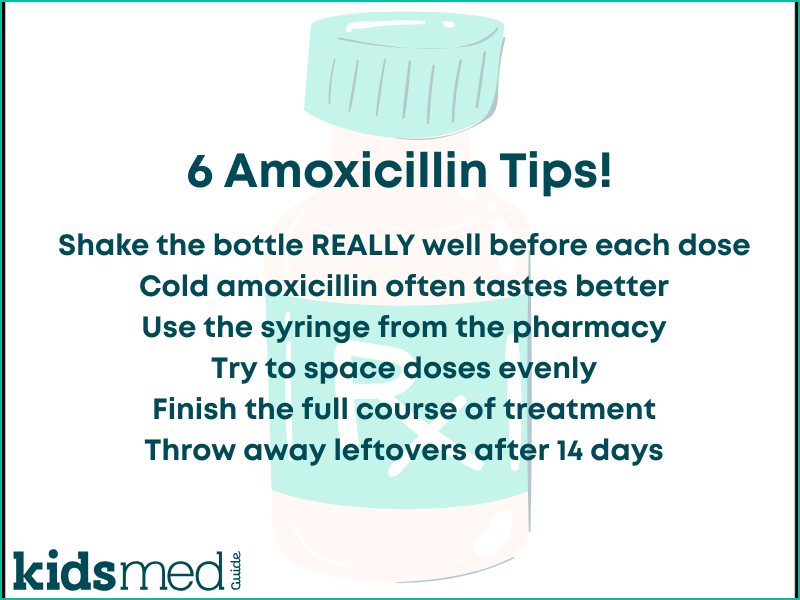
- Shake the liquid well before each use.
- Refrigeration is not required, but many families find that it tastes better cold.
- Use the measuring device provided with the medication.
- It can be given with or without food.
Mixing It With Food or Drinks
- You can mix the liquid with a small amount of milk or juice if needed.
- Use caution with this. If your child does not finish the milk or juice, you will have no idea how much medication they actually received.
- It is important that your child gets the full dose each time.
Timing Tips
- Give the medication at evenly spaced times throughout the day.
- For example, aim for 7 AM and 7 PM for a twice-daily dosing regimen.
- It is OK to be off by an hour or so to accommodate sleep. For example, 8 AM and 6 PM would still be reasonable.
Tips for Babies and Younger Children
- Babies and toddlers usually do best with an oral syringe.
- Squirt the medicine slowly into the inside of the back of the cheek.
- You may need to give it in small increments so your child does not gag or choke from too much liquid at once.
I have fond memories of dancing around my kitchen when my oldest was 4 months old, squirting amoxicillin into the back of her inner cheek in tiny increments and singing to distract her between sips. She was probably thinking, “My mother is crazy.”
Tips for Older Kids
- Older children can often drink the medicine directly from the measuring device or a small cup.
- Some kids prefer taking a sip of juice or a popsicle afterward to wash away the taste.
If Your Child Spits It Out
Did your child immediately spit out their medicine? Fear not. This happens a lot with kids. Read our tips: What to Do When Your Child Spits Out Their Antibiotics.
Related: What to do if Your Child Vomits Medicine
Related: How to Get Your Child to Take Yucky Medicine
How Often and How Long is Amoxicillin Given?
This depends on the type of infection being treated and its severity. Amoxicillin is usually given 2 or 3 times per day for several days, often 7-10 days in total. Kids usually start to feel better after 24-48 hours, but it's very important to complete the full course.
I know this can be frustrating and hard to remember, but it's essential to complete the entire course of antibiotics, even if your child starts feeling better before it's finished.
This helps prevent the infection from returning and reduces the risk of antibiotic resistance. Amoxicillin liquid expires 14 days after it’s dispensed, so promptly throw away any unused medication at the end of your treatment course.
What are the Side Effects of Amoxicillin?
The good news is that amoxicillin is generally safe. Most kids handle it with no significant issues, but here are some things to look out for:
- Diarrhea
- Nausea or vomiting
- Rash
Most of these side effects are mild and resolve on their own. However, contact your child's doctor if these symptoms persist or worsen.
Some children develop a mild rash while taking amoxicillin, which may be a side effect of the medicine or of the illness and not a true allergy, but all rashes should still be evaluated by a healthcare professional.
To prevent diarrhea, you can consider giving your youngster a probiotic medicine or something with active probiotic cultures (like yogurt) to help regulate their GI tract. This is usually safe to do independently, but ask your pediatrician first if your child is a baby or has any health concerns.
Rarely, amoxicillin can cause more serious side effects. Seek immediate medical attention if your child experiences:
- Severe skin rash or hives
- Difficulty breathing
- Swelling of the face, lips, tongue, or throat
- Severe diarrhea with blood in the stool
If your child has had an allergic reaction to penicillin or other antibiotics, inform the doctor before starting amoxicillin.
Also, be sure to let the doctor know about any severe medical conditions your child has so they can screen for drug interactions and an appropriate dose (for example, children with kidney problems may need a lower dose).
What if I Miss a Dose of Medication?
If you miss a dose of medication, take it as soon as you remember. If it’s close to the time of the next dose, skip the missed dose and continue your regular dosing schedule. Don’t double up on a dose if you miss one. I usually set an alarm on my phone because it's easy to forget in a busy household with young kids.
In summary, amoxicillin is a valuable antibiotic given as a first-line choice for many common pediatric infections. However, it only works for certain types of bacterial infections, not for viruses.
Unfortunately, amoxicillin does not help with the flu or the common cold. If your child is prescribed amoxicillin for an ear infection, strep throat, or another condition, they should feel better within 2 days of starting the medication. If their symptoms worsen or do not improve, contact your doctor!
Frequently Asked Questions
How Long Does Amoxicillin Take to Work?
Many children start feeling better within 48 hours of starting amoxicillin. However, it is still important to finish the full course of antibiotics, even if your child seems completely better.
Should Amoxicillin Be Refrigerated?
Liquid amoxicillin does not have to be refrigerated, but many families find that it tastes better cold. Always store it according to the instructions from your pharmacy and throw away any leftover medication after 14 days.
Can Amoxicillin Cause Diarrhea in Children?
Yes. Mild diarrhea is one of the most common side effects of amoxicillin. Giving yogurt with active cultures or a probiotic may help support your child’s gut health, but check with your pediatrician first for babies or children with medical conditions.
What Should I Do If My Child Misses a Dose?
If you miss a dose, give it as soon as you remember. If it is almost time for the next dose, skip the missed dose and continue the regular schedule. Do not give two doses at the same time.
Can Amoxicillin Treat Viruses?
No. Amoxicillin only works against certain bacterial infections. It does not treat viral illnesses like the common cold, flu, RSV, or most coughs.
What Should I Do If My Child Throws Up or Spits Out Amoxicillin?
If your child spits out or vomits the medicine immediately after taking it, contact your pharmacist or pediatrician for guidance. In many cases, another dose may be needed, but this depends on how much medication was swallowed.
Is a Rash From Amoxicillin Always an Allergy?
Not always. Some children develop a mild rash while taking amoxicillin, which is not a true allergy. However, all rashes should be evaluated by a healthcare professional to make sure they are not a sign of a more serious reaction.
References:
U.S. National Library of Medicine. (n.d.). AMOXICILLIN powder, for suspension. DailyMed. https://dailymed.nlm.nih.gov/dailymed/drugInfo.cfm?setid=a91d9ff1-57dc-4569-9d0d-3d1b6ded9773