How to Give Eye Drops to Kids (Without the Battle)

If you've reached this page while desperately searching for advice on administering eye drops to a small child, please accept my condolences.
Kidding. Kind of.
In my experience, there is a rare, easygoing child who follows directions, sits still, and tolerates eye drops without complaint.
Then there's the rest of the pediatric population.
Most kids do not enjoy having liquid dropped into their eyes. You might surprise them the first time, but after that? Good luck convincing them that "Come here, honey, it's time for your eye drops!" is anything but a trap.
Preparation, patience, and creative negotiation are the tricks of the trade for administering eye drops to kids!
How Do You Give Eye Drops to a Child?
To give eye drops to a child:
- Wash your hands.
- Have your child lie down or tilt their head back.
- Gently pull down the lower eyelid.
- Place the prescribed number of drops into the eye.
- Encourage blinking to help spread the medication.
- For babies and toddlers, distraction, rewards, or assistance from another adult may make administration easier and is often required for success.
If your child refuses eye drops entirely, don't worry. We'll cover that too! Keep reading!
Why Might Kids Need Eye Drops?
Children may need eye drops for a variety of reasons, ranging from minor irritation to infections and chronic eye conditions.
Bacterial Conjunctivitis
Let's talk about "The Goop."
And no, I'm not referring to the celebrity skincare brand (though I do enjoy it).
"The Goop" occurs when an eye infection causes thick mucus and discharge to accumulate around the eyelids and tear ducts. Sometimes the discharge becomes so excessive that a child's eyes may be crusted shut upon waking in the morning.
This is often caused by bacterial conjunctivitis, commonly called pink eye.
In addition to the drainage, children may have:
- Red eyes
- Swollen eyelids
- Irritation
- Excessive tearing
When bacterial conjunctivitis is diagnosed, a healthcare provider may prescribe antibiotic eye drops or an ointment.
Viral Conjunctivitis
Viruses can also cause red, irritated eyes.
Unlike bacterial conjunctivitis, viral conjunctivitis usually produces less discharge and does not respond to antibiotics. Instead, treatment focuses on comfort measures while the illness runs its course.
Viral conjunctivitis can occur alongside other illnesses, including:
Allergic Conjunctivitis
Allergies can also cause red, itchy eyes.
Allergic conjunctivitis is often associated with:
- Itching
- Watery eyes
- Seasonal allergies
- Environmental triggers
Unlike bacterial conjunctivitis, allergic conjunctivitis usually causes very little or no thick discharge. Itchiness is the big giveaway!
Eye Injuries and Other Eye Conditions
Children may also need eye drops for:
- Eye injuries
- Dry eyes
- Corneal abrasions
- Glaucoma
- Other prescription ophthalmic conditions
If your child has significant eye pain, vision changes, severe swelling, or an eye injury, contact your healthcare provider promptly.
How to Give Eye Drops to Older Children
If your child is old enough to cooperate—or is one of those magical unicorn children who follows instructions—the process is fairly straightforward.
Step 1: Wash Your Hands and Clean the Eye
If your child has significant eye drainage, gently clean the area first. Use a clean, warm washcloth and place it over the closed eye for a few moments.
Gently wipe from the nose side of the eye toward the cheek side. Repeat as needed until the eye area is clean.
Wash your hands again afterward and wash or discard the washcloth. Use a fresh, clean washcloth for each eye.
Step 2: Position Your Child
Have your child:
- Lie flat, or
- Sit with their head tilted back
Ask them to look up and away. For young or squirmy kids, the AAP recommends having them lean back in your lap and using your legs to help keep them in place. DEFINITELY use positive reinforcement and distractions if you need to do this so they think it's fun, not a torture session.
Step 3: Administer the Eye Drop
If directed on the label, gently shake the bottle first.
Rest your hand on your child's forehead to help stabilize their head.
Hold the bottle approximately 1 inch above the eye and place the prescribed number of drops into the lower eyelid.
Try not to touch the bottle tip to the eye, eyelid, eyelashes, fingers, or any other surface.
Step 4: Let the Medication Spread
Have your child gently blink several times to spread the medicine around.
If blinking feels uncomfortable, they can gently close their eyes and move them around to help distribute the medication.
Have a tissue handy to clean up any watery eyes.
How to Apply Eye Ointment
Eye ointment is applied similarly to eye drops, but it is a little trickier because it takes longer to apply a ribbon of ointment than a quick drop.
Gently pull down the lower eyelid and place a thin ribbon of ointment inside it, usually about one-half inch unless instructed otherwise by your healthcare provider.
Apply the ointment from the nose side of the eye toward the cheek.
Once applied, have your child close their eyes briefly to help the medication spread.
A little blurry vision afterward is normal, but can be bothersome to kids.
Pro Tip
If you're fairly certain you missed entirely and most of the medication ended up on your child's cheek, the floor, the walls, or in your hair, instead of in their eye, it's reasonable to try again.
How to Give Eye Drops to Toddlers and Young Children
This is where things get interesting. Many young kids (and some older ones) dislike the sensation of a drop hitting their eye. Understandably, it is uncomfortable!
According to the American Academy of Pediatrics, if your child cannot or will not stay still, you may need additional help positioning them safely.
The Toddler Pretzel Method
Place your child on their back, ideally on the floor or another safe, flat surface.
A small pillow or a folded towel under the neck can help keep their head tilted back.
Sit behind their head and gently secure their arms and body so they cannot roll away.
I realize this sounds suspiciously like a wrestling move. Toddlers possess a remarkable ability to summon ninja-level evasive maneuvers the second they see a bottle of eye drops.
Once your child is positioned safely:
- Tip the head back.
- Gently open the eyelids if necessary.
- Administer the prescribed number of drops.
- Offer praise, comfort, and reassurance afterward.
Remember, these recommendations are simply techniques to help get necessary medication into the eye.
I fully recognize that every child is different, and I'm not suggesting forcing a child into a terrifying medical experience. Whenever possible, aim for reassurance and trust.
What If My Child Refuses Eye Drops?
This is probably why you're here ☹️
Many parents aren't wondering how to give eye drops. They're wondering how to administer eye drops to a child who absolutely refuses them.
The answer is that there is no single perfect solution. What works for one child may fail spectacularly for another.
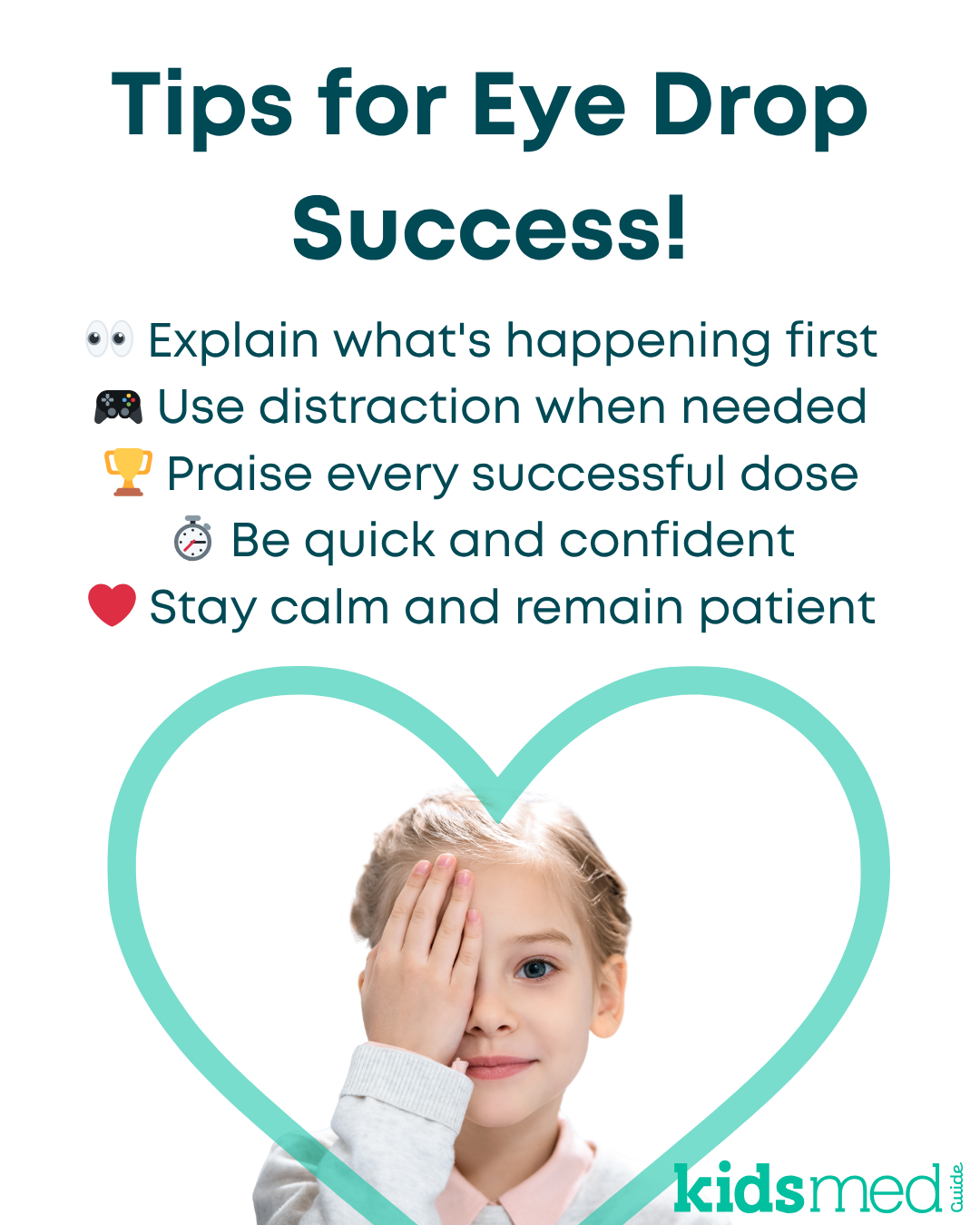
Some strategies that may help include:
- Demonstrating the drops on yourself first ("pretend" or get some simple saline or dry eye drops to avoid medicating yourself)
- Letting your child help hold the bottle
- Practicing with artificial tears first so there is minimal risk
- Offering rewards or incentives (use a high-value, rare treat like a special dessert or candy, a few minutes of screen time, a trip to their favorite playground - pull out the big guns!)
- Using distraction. Distract distract distract.
- Giving choices whenever possible
For example:
"Do you want the drops before your story or after your story?"
Notice that eye drops are happening either way.
We're simply letting them choose how the event unfolds. It's similar to "do you want to eat your carrots first or your broccoli?" or "do you want your black sneakers or your blue ones?" Offer two acceptable choices.
A few summers ago, my oldest daughter had bacterial conjunctivitis. For the first few doses, I offered a small piece of candy after each successful application. (Sorry, dentists!)
Eventually, she realized the eye drops weren't nearly as terrible as she had anticipated, and she didn't give me a hard time about them. I was stuck in a candy loop, though - good thing that prescription was only for 5 days!
My middle child requires an entirely different strategy.
For her, success usually involves answering about 147 questions, providing multiple demonstrations, and calmly pretending I am not frustrated when the medication bounces off her tightly closed eyelids and rolls down her cheek.
Eye Drops for Babies
Babies are a unique challenge. I wish I had a magical parenting trick to share. I do not.
For babies, speed is often the most effective strategy!
I usually administer a drop into one eye, allow the dramatic protest to occur, wait for the eye to reopen, and then quickly administer the second drop. Finish it up with lots of snuggles, hugs, and kisses.
In younger infants, distraction may help. Try using things like:
- Toys
- Music
- Faces
- High-contrast objects
Older toddlers, however, may view attempts to distract them as an insult to their intelligence and become even more suspicious.
Proceed as advised above, and cautiously. It's like looking a dinosaur in the eye - don't let those toddlers smell your fear!
Common Eye Drop Mistakes Parents Make
Be wary of these mistakes in administering eye drops to children!
Touching the Bottle Tip to the Eye
This can contaminate the medication and increase the risk of infection.
Stopping Treatment Too Soon
Even if symptoms improve, continue treatment exactly as directed by your healthcare provider. Many antibiotic eye drops take 5-7 days to work completely and effectively.
Using Someone Else's Prescription
Prescription eye drops should never be shared.
Forgetting to Wash Hands
Good hand hygiene helps prevent the spread of infection and contamination.
Using Expired Eye Drops
Check expiration dates and discard medications that are expired or no longer needed.
After Eye Drop Administration
Congratulations. You've done it. You've successfully placed medication into a child's eyeball. (It should be an Olympic event.)
Once you're finished:
- Wipe the bottle tip if directed by the package insert.
- Replace the cap immediately.
- Store the medication safely away from children.
- Follow storage instructions on the label.
Most eye drops are stored at room temperature, but some products require refrigeration.
If refrigeration is required, allowing the drops to warm briefly to room temperature before administration may make them more comfortable.
Finally, continue using the medication for as long as your healthcare provider recommends.
Breathe a sigh of relief and buck up—the next dose is probably due soon! 😉
Frequently Asked Questions
What if my child closes their eyes during eye drop administration?
If the eye drops land near the inner corner of your child's closed eye, some medication may still enter the eye when they open it. Keep watch to see what appears to enter the eye versus what falls out. If you are confident the medication mostly or completely missed the eye, it is generally recommended to try again.
Can I give another eye drop if most of it ran down my child's face?
Yes. If most of the medication immediately runs down your child's cheek or never seems to reach the eye, it is usually reasonable to repeat the dose. If you're unsure whether enough medication entered the eye, contact your pharmacist or healthcare provider for guidance.
How long should children use antibiotic eye drops?
Use antibiotic eye drops exactly as directed by your healthcare provider. Even if symptoms improve after a few days, completing the prescribed course helps ensure the infection is fully treated.
Do eye drops sting in children?
Some eye drops may cause mild stinging, burning, or temporary blurry vision after application. These effects are usually brief and improve within a few minutes. If severe pain or worsening symptoms occur, contact your healthcare provider.
Should eye drops be refrigerated?
Most eye drops are stored at room temperature, but some products require refrigeration. Always check the prescription label or package instructions for proper storage.
When should I call a doctor for red eyes?
Contact your healthcare provider if your child has significant eye pain, vision changes, severe swelling, light sensitivity, an eye injury, worsening symptoms, or signs of infection in a newborn.
Can pink eye go away without antibiotic eye drops?
Sometimes. Viral and allergic conjunctivitis do not improve with antibiotics and are treated with supportive care. Some mild cases of bacterial conjunctivitis may also improve on their own, but treatment recommendations vary based on your child's age, symptoms, and medical history.
Can my child go to school or daycare with pink eye?
School and daycare policies vary. Many children can return once treatment begins or when symptoms improve, but parents should follow guidance from their healthcare provider and the school's illness policy.
References:
CDC. (2024, April 15). Conjunctivitis (Pink Eye). Conjunctivitis (Pink Eye). https://www.cdc.gov/conjunctivitis/index.html
Conjunctivitis: What Is Pink Eye? (Copy). (2023, April 17). American Academy of Ophthalmology. https://www.aao.org/eye-health/diseases/conjunctivitis-what-is-pink-eye-copy
How to Give Eye Drops and Eye Ointment. (2013, February 13). HealthyChildren.Org. https://www.healthychildren.org/English/safety-prevention/at-home/medication-safety/Pages/How-to-Give-Eye-Drops-and-Eye-Ointment.aspx
Pink eye (conjunctivitis)—Symptoms and causes. (n.d.). Mayo Clinic. Retrieved June 15, 2026, from https://www.mayoclinic.org/diseases-conditions/pink-eye/symptoms-causes/syc-20376355