Seasonal Allergies In Kids: Symptoms, Causes, And How To Tell If It’s A Cold

Imagine it’s the month of May. Birds are chirping, the sun is shining, and parents everywhere are finally recovering from cold and flu season.
We made it. We really made it.
Then your child runs inside, and you hear it.
The sneeze. Then another. Then the sniffing begins.
No. Absolutely not.
But when you take a closer look, something feels.... different? No fever. No fatigue. Just sneezing, itchy eyes, and no end to the symptoms.
Welcome to seasonal allergies in kids!
What Is Allergic Rhinitis?
If this sounds familiar, your child is likely experiencing allergic rhinitis, also known as hay fever or seasonal allergies.
In simple terms, an allergy is the body’s overreaction to something harmless. Think of it like asking a toddler to put on shoes. The response is… disproportionate.
With seasonal allergies, the immune system mistakes substances like pollen for a threat. It releases antibodies, which then trigger the release of chemicals like histamine. This histamine release causes the typical allergy symptoms.
Why Do Seasonal Allergies Happen In Kids?
In children with allergies, histamine triggers irritation in the eyes, nose, and throat.
This leads to:
- Sneezing
- Itchy eyes, nose, and throat
- Clear runny nose
- Nasal congestion
Symptoms often last a long time. During spring and summer, this can cause prolonged symptoms, especially when exposed to common triggers like tree and grass pollen.
Seasonal Allergies Vs. Viral Colds In Children
One of the most common questions parents have is whether their child has allergies or just another cold.
Here’s a breakdown!
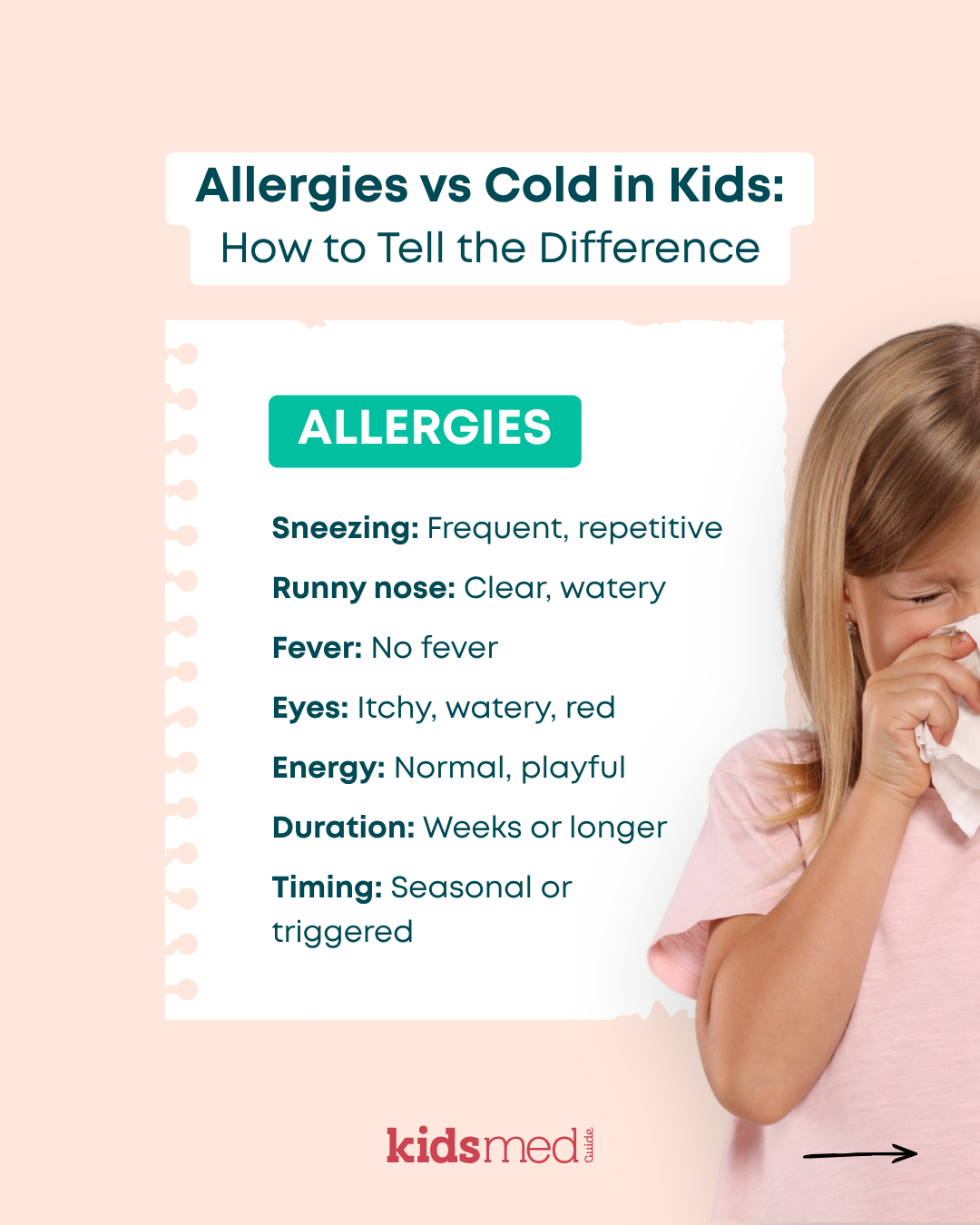
Seasonal allergies
- Occur around the same time each year - something in the season (like pollen release) triggers it!
- Last week or months
- Clear, watery nasal discharge
- Itchy eyes, nose, and throat
- Frequent sneezing
- No fever
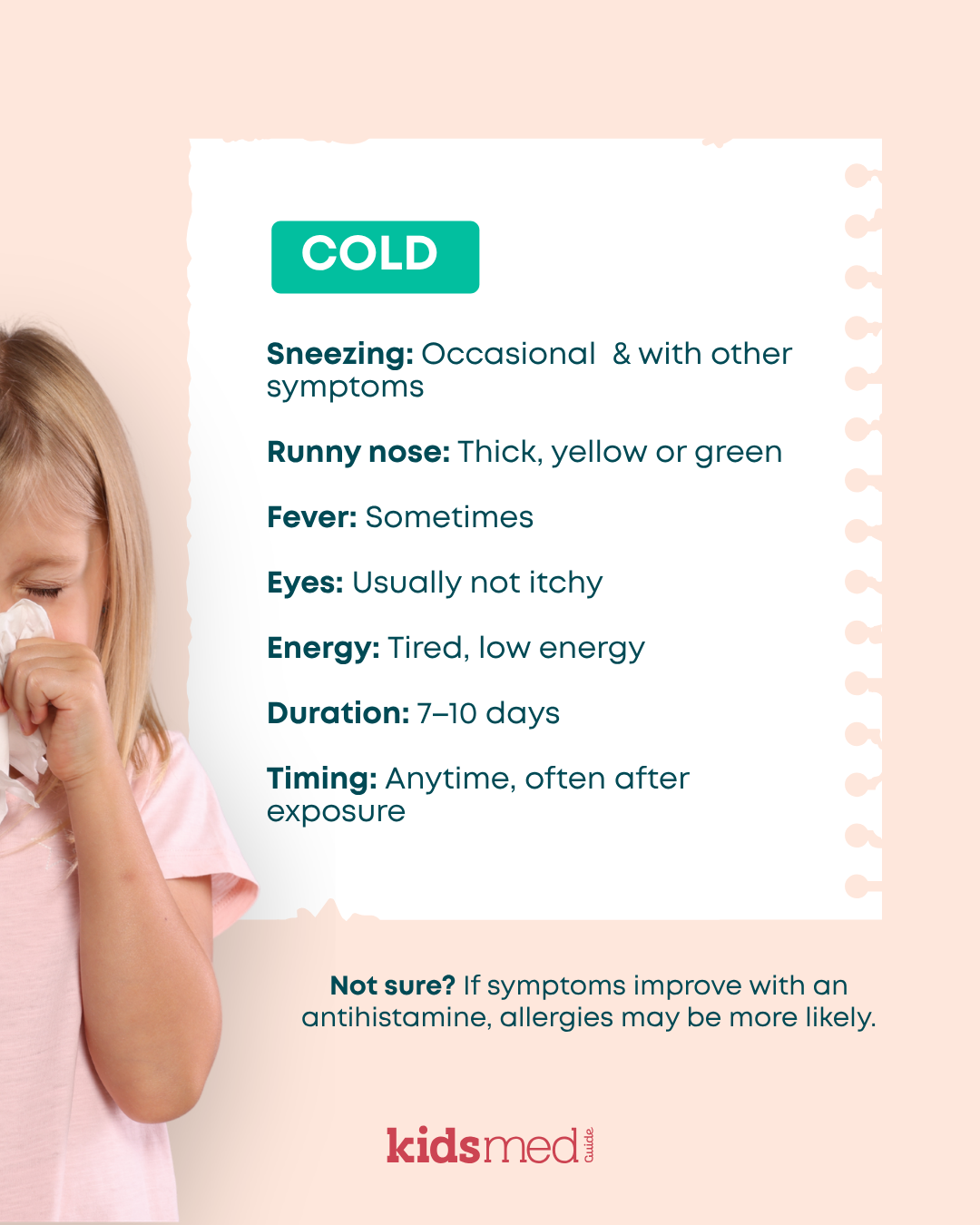
Viral cold
- Occurs randomly (after exposure to a virus)
- Usually lasts 7–10 days
- Thicker nasal discharge (yellow or green)
- Minimal itching
- Fever may be present
- Sore throat more common
- Other symptoms like headache, fatigue, and body aches may be present
When To Call Your Child’s Doctor
If this is your child’s first experience with seasonal allergies, it’s reasonable to check in with your pediatrician, especially if your child is under age 2.
You should also reach out if:
- Symptoms are severe or worsening
- There are breathing concerns
- Your child has asthma or another lung condition
- Symptoms are occurring in very young children
Allergies are less common in children under 2 years old since they typically require repeated exposure over time.
Any signs of trouble breathing should always be treated as an emergency.
Do Seasonal Allergies Only Happen In Spring?
Short answer: nope!
While spring pollen is a major trigger, seasonal allergies in kids can occur year-round depending on the allergen.
- Spring: tree pollen
- Summer: grass pollen
- Fall: ragweed
- Winter: indoor triggers like dust mites or pet dander
So if you thought you escaped allergy season… well, here's to hoping.
How To Treat Seasonal Allergies In Kids
Managing allergic rhinitis in children generally requires a combined approach.
Avoidance strategies
Reducing exposure is ideal, but it isn't always practical with airborne allergens like pollen. The best way to prevent an allergic reaction to an environmental trigger like pollen is to avoid it.
Read our blog on Treating and Preventing Allergies Without Medication for more allergy prevention tips!
Medication options
Once symptoms start, allergic rhinitis can be difficult to control. Even with the best avoidance strategies, medication is often needed through the remainder of the allergy season.
Common options include:
- Antihistamines
- Intranasal steroids
- Other supportive therapies
Read: Best Allergy Medicine For Kids: A Parent's Guide to What Works
Related: What Drugs Are Safe and Effective for Seasonal Allergy Treatment
Final Thoughts
Seasonal allergies can be frustrating, especially when they last for weeks and seem just like a never-ending cold. ESPECIALLY when it happens right after a long cold season!
The good news is that once you recognize the pattern, it becomes easier to manage. Start avoiding allergen triggers and beginning allergy medicine early, ideally a few weeks before symptoms start.
Frequently Asked Questions
How can I tell if my child has allergies or a cold?
Allergies tend to last longer, occur at the same time each year, and are associated with itching but not fever. Colds are shorter and may include other symptoms such as a fever, fatigue, body aches, or a sore throat.
At what age do seasonal allergies start in kids?
Seasonal allergies are rare in children under 2 because they need repeated exposure to allergens over time.
Can seasonal allergies cause a cough?
Yes, although it's less common than sneezing and itching. If a cough occurs, it is typically mild and related to post-nasal drip or nasal irritation. However, children with asthma may experience more serious coughing and should always be seen by a healthcare provider.
Do seasonal allergies go away on their own?
Symptoms improve when exposure to the allergen decreases, but during peak seasons, treatment is often necessary to keep symptoms under control.
When should I see a doctor for my child’s allergies?
You should consult your pediatrician if symptoms are severe, persistent, affecting sleep or daily activities, or if your child has asthma or breathing issues.
References
Nemours KidsHealth. (2022, January). Kids and Allergies. https://kidshealth.org/en/parents/allergy.html
Healthychildren.org. (2021, June 2). Is It Allergies or a Cold? How to Tell the Difference. https://www.healthychildren.org/English/health-issues/conditions/allergies-asthma/Pages/Is-It-Allergies-or-a-Cold-How-to-Tell-the-Difference.aspx