Safe Storage of Medications During Holiday Candy Season
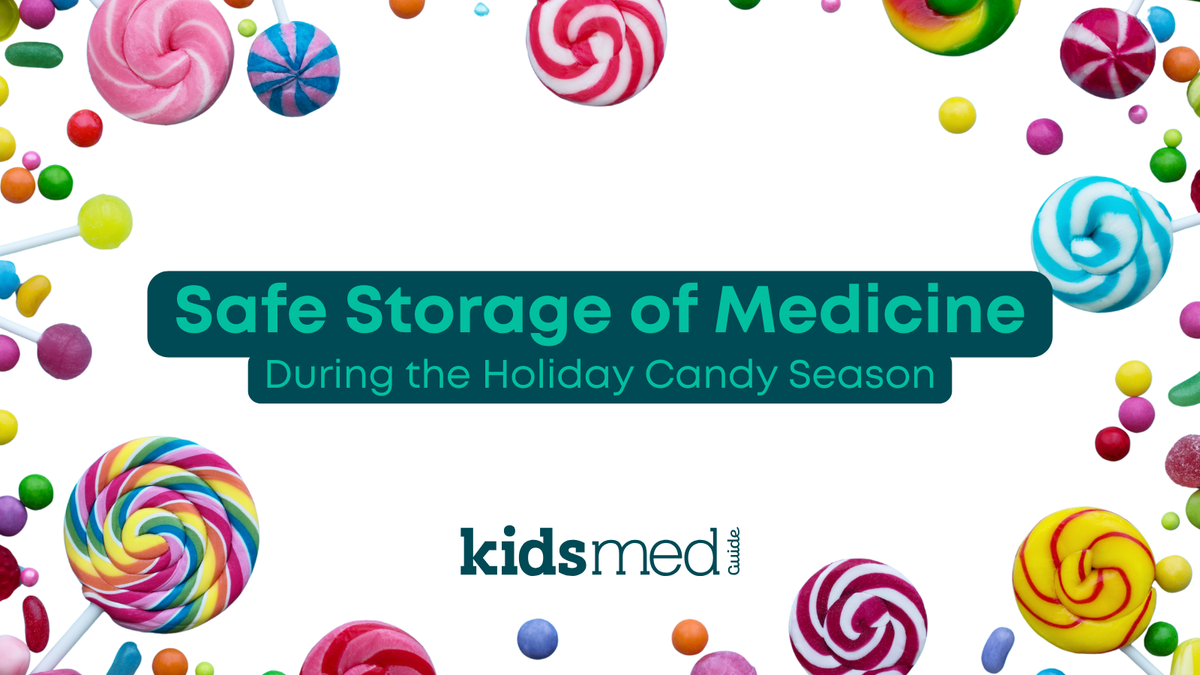
Every holiday season, my house turns into a candy crazed place of chaos. Between Halloween leftovers, goodie bags, classroom parties, and Christmas stockings, my kids somehow manage to hide treats in every corner of the house.
Despite my best efforts, I’ve found candy canes mushed into couch cushions, Halloween candy sneaked into their desk drawers, discarded wrappers in the playroom, and a “secret stash” of old Skittles hidden in a backpack pocket. Gross. I guess I’m raising candy fiends.
I need to improve how I handle my candy rules! Not just for their health, but also because of the risks of unsupervised candy-eating. There's always the chance of choking, along with issues from high-sugar diets and dental problems.
Parents should also be aware that during the holiday candy season, from Halloween through the New Year, bright colors, shiny wrappers, and sweet smells can make almost anything seem like a treat, and kids are likely to be on the lookout for them.
Children, even older ones, can easily mistake candy for medicine. Safe medication storage is important at all times, especially during this season. Candy storage and consumption should also be closely monitored.
Why Medication Storage Matters During the Holiday Season
The holiday season brings joy, family gatherings, and busy schedules. Homes fill up with visitors, travel bags, candy bowls, and decorations. Unfortunately, all this excitement can also increase the risk of accidental ingestions.
According to recent CDC‑authored analyses, tens of thousands of children visit emergency departments each year for unsupervised medication exposures — about 36,500 visits in 2020 among children five and under, and roughly 678,000 visits across 2009–2020.
Safety organizations remind families that mix-ups and accidental exposures are more likely when households are busy or distracted — which is often the case during most holidays.
Brightly colored pills, chewables, and gummy vitamins or supplements are common culprits of pediatric medication confusion. Proper medication storage — meaning medicines are secured, clearly labeled, and separated from food or treats — can help prevent these scenarios.

Safe Medication Storage Practices for Parents
These practices should be done year-round, but the holiday season is a great time to double-check that your home is safe!
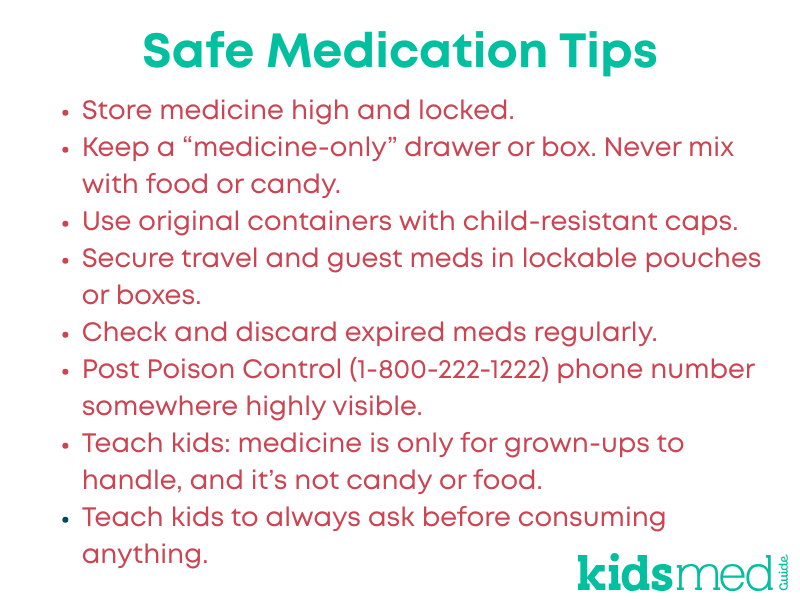
- Keep all medications, including vitamins and supplements, locked up or stored high out of children's reach. National pediatric guidance emphasizes storing medicines in a locked cabinet or on a high shelf where kids can’t see or reach them.
- Never leave medications in unattended, easy to reach purses, backpacks, or gift bags. These are easy targets for little hands.
- Always store medicines in their original containers with child-resistant caps. Original bottles provide dosing instructions, safety caps, and emergency labels.
- Remind guests to store their medicines safely as well. Visiting relatives might not realize how quickly a toddler can unzip a suitcase. Older generations, like grandparents, may be less aware of the risks and more likely to be on medication that could seriously harm a small child. Kindly offer them a designated, secure spot, preferably in a locked location or stored up high.
- Check your “medicine-only” drawer for safety compliance. Even if it’s organized, it should still be stored high, locked, dry, and away from food.
Holiday Safety Tip — The Medicine‑Only Drawer:
Keep a dedicated drawer or cabinet for medications, but make sure it follows these rules:
- Out of children’s sight and reach
- Locked with a safety latch or combination lock
- Contains only medicine (no candy, food, or cosmetics)
- Uses original packaging with intact child‑resistant caps
- Teach your children that this area is off-limits
Preventing Confusion Between Candy and Medicine
Children, especially toddlers and preschoolers, are visual learners. When they see something small, colorful, and sweet‑smelling, they assume it’s candy. During the holiday season, that assumption can lead to real danger.
A few ways to keep things clear and safe:
- Store candy and medicine in completely separate locations. Never keep them in the same drawer or bag.
- Supervise kids while they're sorting or trading holiday candy. It’s fun, but watch what ends up in their hands (or mouths).
- Teach children that medicine is not candy and should never be treated as a toy or treat. Emphasize that medicine should only be given by a trusted adult.
- Model safe behavior. Take your own medications privately, not in front of young children who might mimic you.
- Introduce and enforce a rule that children must always ask a trusted adult before eating anything.
- Never refer to medicine as candy or try to convince a reluctant child that their medicine tastes just like candy or a treat.
- As a consumer, be cautious when purchasing your medications. Over-the-counter medicines, supplements, and products meant for adults, whether medicinal or recreational, often come in attractive packaging. Steer clear of items that might attract young children.
What to Do If a Child Accidentally Takes Medicine
Even with the best precautions, accidents can still happen. My child once ate an entire green crayon, thinking it was candy. Luckily, the crayon was non-toxic! However, it did lead to a colorful diaper change 😑
If you know or suspect that your child has consumed medication or another substance, follow these steps:
1. Stay calm and call Poison Control immediately at 1‑800‑222‑1222 (U.S. only). This connects you to experts 24/7.
2. Do not induce vomiting unless explicitly instructed by a healthcare professional.
3. Keep the medicine packaging to share with Poison Control or emergency personnel. They will ask what your child took and an estimate of how much.
4. Watch your child closely for symptoms like drowsiness, vomiting, confusion, irregular heartbeat, trouble breathing, or unusual behavior. If you cannot reach Poison Control, go straight to the nearest emergency room.
Call 911 immediately for life-threatening emergencies.
Know your child’s weight, age, any medications they are taking, and any health conditions they have.
Year-Round Medication Safety Habits for Families
The holidays bring these risks to the forefront, but kids’ medicine safety is a year‑round priority.
- Check expiration dates regularly and properly dispose of old medicines at a take‑back site.
- Use a childproof medication organizer if needed. Store it up high and out of sight.
- Teach kids early about what medicine is and why only adults should handle it.
- Keep a list of emergency numbers (like Poison Control) and current medications posted somewhere visible, like the fridge or your phone’s notes app.
- Review your medicine cabinet or medicine storage plan before travel or when guests are visiting.
Conclusion
The holiday season from Halloween through the New Year presents unique challenges in keeping children safe. Treats and temptations are everywhere. Parents often get distracted. Children are riding a sugar rush! Families travel, and guests (with medications) may stay in your home.
Practicing safe medication storage is always important, especially during this time of year. Ensure your family's medications are securely stored out of children's reach. Watch all candy consumption closely and enforce the rule that children must ask before eating any treats. Be aware of guests and their possible medications, whether at your home or while visiting loved ones.
Frequently Asked Questions
Why is medication safety especially important during the holidays?
Because homes are often busier, and candy‑like treats are everywhere. Kids may confuse medicine for candy, especially when routines are disrupted or guests bring medications.
How can I store medications safely when guests visit?
Provide visitors with a secure place — like a high cabinet or lockbox — to store their medicine. Encourage them to keep pill bottles out of purses or accessible bags. Closely watch your toddlers and young children when guests are visiting or when you are away from home.
What should I do if my child mistakes medicine for candy?
Call Poison Control immediately at 1-800-222-1222. Dial 911 for life-threatening emergencies. Do not induce vomiting unless instructed by a healthcare professional. Keep the package for reference.
Are gummy vitamins dangerous if mistaken for candy?
Yes. Too much of even a vitamin can be harmful. Treat all supplements and vitamins like medicines — store them securely and supervise use.
What’s the best way to teach kids about medicine safety?
Use simple, consistent messages like “medicine helps you feel better, but only when an adult gives it to you.” Kids learn best through repetition and example.
The following references were used to compile this information:
Avoid a Trip to the Emergency Room. (n.d.). Up and Away. Retrieved October 30, 2025, from https://upandaway.org/
Lovegrove, M. C., Weidle, N. J., Geller, A. I., Lind, J. N., Rose, K. O., Goring, S. K., & Budnitz, D. S. (2023). Trends in Emergency Department Visits for Unsupervised Pediatric Medication Exposures. American Journal of Preventive Medicine, 64(6), 834–843. https://doi.org/10.1016/j.amepre.2023.01.011
Medication Safety. (2025, January 9). HealthyChildren.Org. https://www.healthychildren.org/English/safety-prevention/at-home/medication-safety/Pages/default.aspx
Poison Prevention & Treatment Tips for Parents. (2021, September 6). HealthyChildren.Org. https://www.healthychildren.org/English/safety-prevention/all-around/Pages/Poison-Prevention.aspx?utm_source=chatgpt.com
PROTECT Initiative: Using a Healthy People 2030 Objective to Advance Children’s Medication Safety—News & Events | odphp.health.gov. (n.d.). Retrieved October 30, 2025, from https://odphp.health.gov/news/202308/protect-initiative-using-healthy-people-2030-objective-advance-childrens-medication-safety?utm_source=chatgpt.com
Team, B. E. (2024, February 23). Preventing Accidental Overdose: How to Safely Administer Medications to Kids. Cincinnati Children’s Blog. https://blog.cincinnatichildrens.org/safety-and-prevention/preventing-accidental-overdose-how-to-safely-administer-medications-to-kids/
Vaida, A. J. (2015). The Institute for Safe Medication Practices and Poison Control Centers: Collaborating to Prevent Medication Errors and Unintentional Poisonings. Journal of Medical Toxicology, 11(2), 262–264. https://doi.org/10.1007/s13181-015-0475-y