Allergy Medication Adjustments for Winter


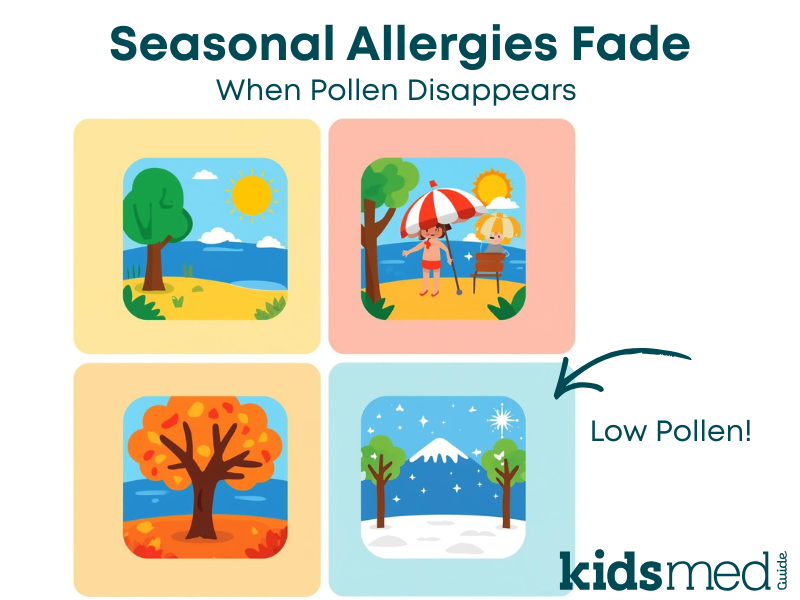
Once winter rolls around, allergy season usually winds down in our house. Personally, I don’t love the winter because cold air hurts my face (why do I live somewhere where the air hurts my face?!), but there are some perks – playing in the snow and the lack of pollen!
My kids have seasonal allergies and need daily allergy medication, such as cetirizine, in the spring and fall. Even our high-maintenance dog has seasonal allergies. But fortunately, everyone gets relief in the winter once the pollen's gone.
Of course, that quiet, sneeze-free window never lasts long and is quickly replaced by the rotating lineup of winter colds that make their way through school, the bus, and back into our living room.
This article focuses on seasonal allergy patterns, why winter often brings symptom relief, how geography plays a role, and how families can safely adjust allergy medications with a plan. Indoor or year-round allergy triggers are important, but they are a separate issue and should be addressed differently.
Why Winter Often Brings Relief From Seasonal Allergies
Seasonal allergies are caused by outdoor pollens, not cold air itself. Trees, grasses, and weeds release pollen during specific times of year, and for many children, ragweed is the biggest trigger in late summer and fall.
The ragweed count in my area was tough this fall! We all had several itchy, sneezy weeks. Once a hard frost arrives, ragweed plants die off, and pollen counts drop sharply.
For kids whose symptoms clearly follow a seasonal pattern, winter often brings noticeable improvement. Sneezing, nasal congestion, and itchy eyes tend to ease once outdoor exposure decreases.
This is why winter is often an appropriate time to reassess daily allergy medication rather than continuing it automatically.
Geography Matters More Than the Calendar
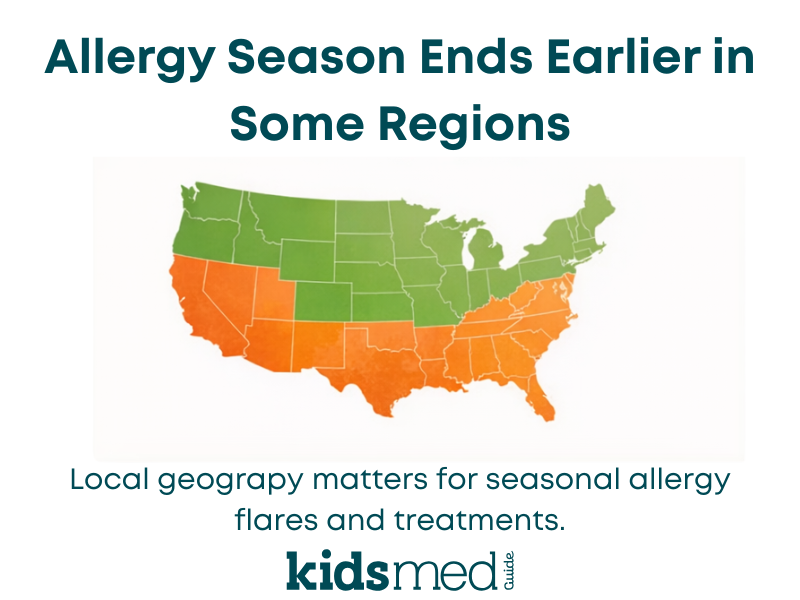
Not every child experiences allergy relief at the same time. Where you live plays a major role in when pollen seasons end.
Colder northern regions often see quicker relief once frost sets in, while warmer climates may have longer or overlapping pollen seasons. Tracking your child’s symptom patterns year to year can help guide medication decisions.
Seasonal Allergies vs. Year-Round Allergies in Kids
Seasonal allergies follow a predictable pattern and improve when the triggering pollen disappears. If a child consistently feels better every winter, that strongly suggests seasonal allergic rhinitis rather than a year-round condition.
When symptoms persist through winter, especially indoors, other triggers such as dust mites, pet dander, or mold may be involved. Food or other environmental triggers could also be contributing factors.
These situations require a different approach and should not be managed the same way as winter relief from seasonal allergies. Talk with your pediatrician or allergist if your child does not gain relief once pollen season ends and you suspect your child has year-round allergic rhinitis.
Adjusting Allergy Medication Once Symptoms Improve
When seasonal symptoms improve in the wintertime, many pediatricians recommend reassessing daily allergy medication rather than continuing it out of habit. In kids, less medicine is often more!
For some children, this means stopping daily antihistamines or steroid nasal sprays during the winter. For others, it may mean switching to as-needed use or reducing the dose.
Common winter adjustments include pausing daily oral antihistamines, stopping daily nasal steroid sprays once congestion resolves, and using saline sprays for dry or mildly stuffy noses. Any medication changes should be made under a pediatrician's guidance.
Why Kids With Seasonal Allergies Still Need a Plan
Even when winter brings relief, seasonal allergies tend to return. Having a simple plan helps families know when to restart medicine, which medications worked best in the past, and when to check back in with a pediatrician.
It’s pretty common to wean off allergy medication once the pollen has run its course and to start it up again a few weeks before pollen is expected to return.
For example, children with spring and fall seasonal allergies may take medicine from late March through June, take a break in July, then resume in August and continue through October. This varies by geographical location, circulating allergens, and your child’s specific triggers.
When Winter Symptoms Are Not Allergies
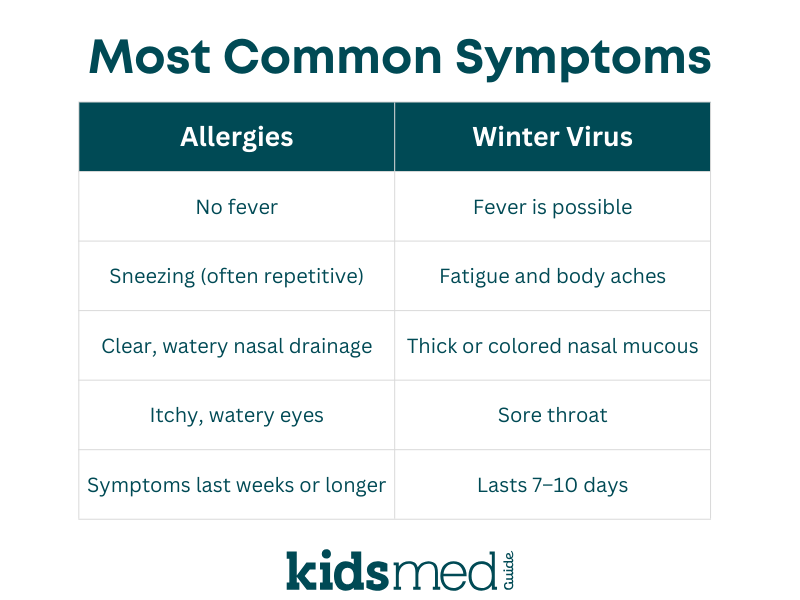
Not every runny or stuffy nose in winter is seasonal allergy-related. Viral respiratory infections, dry indoor air, and indoor allergens can all cause symptoms that look similar.
Continuing children’s allergy medicine for winter symptoms that do not improve may not help if allergies are not the cause. Respiratory viruses are incredibly common in children during the winter months. Many congested, runny noses are caused by the common cold or other viruses.
One way to tell the difference? Itchiness is a hallmark sign of allergic rhinitis, while symptoms such as fever, fatigue, and body aches are associated with viral infections.
Safe Use of Allergy Medicines During Winter
Whether daily medications are paused or not, remember to use allergy medicines carefully.
- Use age-appropriate products intended for children
- Check the age limits on the product
- Measure liquid medicines accurately using an oral syringe or dosing cup with markings in milliliters (mL)
- Avoid overlapping ingredients or combination drugs from multiple products
Combination cold and allergy medicines can increase the risk of accidental double-dosing of antihistamines or other drugs, such as acetaminophen (Tylenol).
When to Check In With a Pediatrician
Parents should contact a pediatrician if symptoms persist throughout the winter, interfere with sleep or school, include wheezing or changes in breathing, or do not improve with an appropriate medication dose or dose adjustments.
Conclusion
For many kids with seasonal allergies, winter brings a break. It is often reasonable to pause daily allergy medication rather than continue it automatically. This varies by geographical location and a child’s individual triggers. Winter may bring more germs, but at least there’s some relief from the itch!
FAQ Section
Why do allergies often improve in winter?
Outdoor pollen levels drop after a frost, reducing exposure for children with seasonal allergies.
Is it safe to stop allergy medicine during winter?
Yes, for many children with seasonal allergies, it is safe and appropriate to take a break from daily allergy medicine when done under a pediatrician’s guidance. Some children may benefit from year-round medication – speak with your child’s pediatrician or allergist.
What if symptoms continue all winter?
Persistent symptoms may indicate indoor allergens or another condition rather than seasonal allergies. Speak with your child’s pediatrician or allergist.
Should allergy medicine be restarted before spring?
Many kids benefit from restarting medication before pollen season begins, depending on past symptom patterns. Ideally, daily allergy medication is started a few weeks before the typical rise in pollen count and symptom onset.
When should I call a doctor about my child’s allergies?
If symptoms persist, worsen, or affect breathing, sleep, or daily activities, medical guidance is recommended.
The following references were used to compile this information:
Dykewicz, M. S., Wallace, D. V., Amrol, D. J., Baroody, F. M., Bernstein, J. A., Craig, T. J., Dinakar, C., Ellis, A. K., Finegold, I., Golden, D. B. K., Greenhawt, M. J., Hagan, J. B., Horner, C. C., Khan, D. A., Lang, D. M., Larenas-Linnemann, D. E. S., Lieberman, J. A., Meltzer, E. O., Oppenheimer, J. J., … Steven, G. C. (2020). Rhinitis 2020: A practice parameter update. Journal of Allergy and Clinical Immunology, 146(4), 721–767. https://doi.org/10.1016/j.jaci.2020.07.007
Is It a Cold or Allergies? How to Tell the Difference. (2025, May 20). HealthyChildren.Org. https://www.healthychildren.org/English/health-issues/conditions/allergies-asthma/Pages/Is-It-Allergies-or-a-Cold-How-to-Tell-the-Difference.aspx?_gl=1*1w9mwf3*_ga*NDgwMTYxMDcyLjE3NjcwNTgxODU.*_ga_FD9D3XZVQQ*czE3NjcxNTA4NTAkbzQkZzEkdDE3NjcxNTA4NTIkajU4JGwwJGgw
Seasonal Allergies in Children. (2023, July 25). HealthyChildren.Org. https://www.healthychildren.org/English/health-issues/conditions/allergies-asthma/Pages/Seasonal-Allergies-in-Children.aspx